OpenFiction
Chart your favourite characters across books and series. Discover who appears where, how they change, and the connections between them.
Universes
View all →
The Sprawl
1 series1 book
The Sprawl is William Gibson's interconnected fictional setting spanning his landmark cyberpunk trilogy and several short stories from the 1980s. The name refers to the Boston-Atlanta Metropolitan Axis, a vast urban corridor stretching along the eastern seaboard of a near-future United States, though the stories range across the globe and even into orbital space. The universe is defined by its vision of a hyper-connected, corporate-dominated world where hackers jack into cyberspace - a shared digital hallucination - while street-level hustlers navigate a gritty, technology-saturated underworld. Megacorporations wield more power than governments, artificial intelligences push against the limits of their constraints, and the line between human and machine blurs through cybernetic modification. Gibson's Sprawl stories are widely credited with defining the cyberpunk genre and introducing concepts - cyberspace, ICE, the matrix - that shaped how an entire generation imagined the digital future.

Temerant
1 series
The Four Corners of Civilisation - a world where the University teaches science and sympathy (a form of magic), and the Chandrian are figures of legend and terror.

Discworld
6 series6 books
The Discworld is the fictional world where English writer Sir Terry Pratchett's Discworld fantasy novels take place. It consists of an interstellar planet-sized disc, which sits on the backs of four huge elephants, themselves standing on the back of a world turtle, named Great A'Tuin, as it slowly swims through space. The Disc is the setting for all forty-one Discworld novels; it was influenced by world religions which feature human worlds resting on turtles, as a setting to reflect situations on Earth, in a humorous way. The Discworld is peopled mostly by three main races: men, dwarfs, and trolls. As the novels progress, other lesser known races are included, such as dragons, elves, goblins, and pixies. Pratchett first explored the idea of a disc-shaped world in the novel Strata (1981).

The Culture
1 series
The Culture is a fictional interstellar post-scarcity civilisation or society created by the Scottish writer Iain Banks and features in a number of his space opera novels and works of short fiction, collectively called the Culture series. In the series, the Culture is composed primarily of sentient beings of the humanoid alien variety, artificially intelligent sentient machines, and a small number of other sentient "alien" life forms. Machine intelligences range from human-equivalent drones to hyper-intelligent Minds. Artificial intelligences with capabilities measured as a fraction of human intelligence also perform a variety of tasks, e.g. controlling spacesuits. Without scarcity, the Culture has no need for money; instead, Minds voluntarily indulge humanoid and drone citizens' pleasures, leading to a largely hedonistic society. Many of the series' protagonists are humanoids who have chosen to work for the Culture's diplomatic or espionage organs, and interact with other civilisations whose citizens act under different ideologies, morals, and technologies.
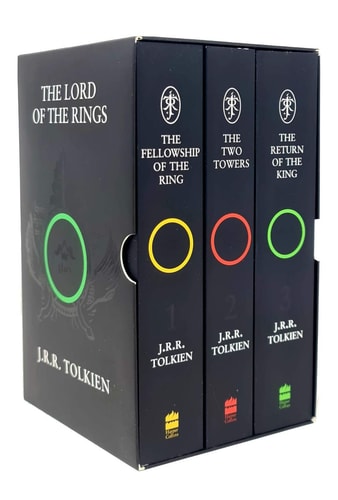
Middle Earth
1 series
Middle-earth is the setting of much of the English writer J. R. R. Tolkien's fantasy. The term is equivalent to the Miðgarðr of Norse mythology and Middangeard in Old English works, including Beowulf. Middle-earth is the oecumene (i.e. the human-inhabited world, or the central continent of Earth) in Tolkien's imagined mythological past. His most widely read works, The Hobbit and The Lord of the Rings, are set entirely in Middle-earth. "Middle-earth" has also become a shorthand term for Tolkien's legendarium, his large body of fantasy writings, and for the entirety of his fictional world.

The Cosmere
3 series
The cosmere is a fictional shared universe where many of Brandon Sanderson's books take place. As a result, books set in the cosmere share a single cosmology and underlying rules of magic, and some characters from one world will make appearances on other worlds. Despite the connections, Brandon has remained clear that one does not need any knowledge of the broader cosmere to read, understand, or enjoy books that take place in the cosmere. The core sequence of the cosmere will consist of the Dragonsteel series, the Elantris trilogy, at least four eras of the Mistborn series, and The Stormlight Archive. The story of the cosmere does not include any books that reference Earth, as Earth is not in the cosmere. The shared "creation myth" of the cosmere revolves around Adonalsium, the power of creation, which was broken into sixteen pieces called Shards in an event known as the Shattering of Adonalsium. The Shards are effectively gods, and magic is derived from their power.
Series
View all →
Tiffany Aching
by Terry Pratchett
Tiffany Aching is a young witch, social worker, and cheese maker extraordinaire. She hails from a long line of shepherds and has a powerful connection with the Chalk where she lives. Wherever Tiffany goes, it's almost certain that a horde of tiny fighting, drinking blue men in kilts - the Nac Mac Feegle - won't be far away. The five books follow Tiffany from age nine through to young adulthood, each dealing with a different stage of growing up and learning what it means to be a witch. The series connects back to the Witches sub-series, with Granny Weatherwax serving as Tiffany's mentor. The Shepherd's Crown, the final Discworld novel, serves as a conclusion to both Tiffany's story and the series as a whole.

Moist von Lipwig / The Industrial Revolution
by Terry Pratchett
Moist von Lipwig is a cheat, a swindler, and a conman - so he's the natural choice whenever an ailing institution needs new management. With a taste for flashy suits and even flashier publicity stunts, he takes on some of the worst jobs on the Disc and battles even bigger crooks than himself. Going Postal puts him in charge of the defunct Ankh-Morpork Post Office, Making Money hands him the Royal Bank, and Raising Steam sees him overseeing the development of the railway. The three books chart the Disc's industrial modernisation, with Moist as the reluctant engine of progress, always one step ahead of exposure. Lord Vetinari looms large as the puppet master behind each appointment.

Death
by Terry Pratchett
Death is, as you'd expect, a tall hooded skeleton with a scythe who SPEAKS IN A VOICE LIKE THE SLAMMING OF COFFIN LIDS. However, he also likes a good curry, kittens, and finds the lives of mortals endlessly fascinating. Beginning with Mort, in which Death takes on an apprentice, the series explores what happens when an immortal anthropomorphic personification develops an unhealthy interest in humanity. His granddaughter Susan Sto Helit becomes the central character from Soul Music onwards, reluctantly stepping in whenever Death goes missing or takes on new responsibilities. The five books range from workplace comedy to meditations on belief, memory, and time - Hogfather tackles the power of myth, while Thief of Time deals with the nature of time itself.

The Witches
by Terry Pratchett
Discworld's witches, based around the rural and mostly vertical kingdom of Lancre, deliver babies, treat warts, and keep an eye on troublesome kings, vampires, and incursions from other worlds. They don't have leaders, but Granny Weatherwax is the most highly regarded and steely of the leaders they don't have, assisted by Nanny Ogg - mother of fifteen and brewer of lethally strong cider. Equal Rites introduces witchcraft on the Disc, but the core trio forms in Wyrd Sisters, which sets the template for the series: sharp parodies of well-known stories (Shakespeare, fairy tales, opera) filtered through Pratchett's rural comedy. Across six books, the cast expands to include Magrat Garlick and later Agnes Nitt, and the stories move from Lancre to Genua and back again.
Rincewind / The Wizards
by Terry Pratchett
Rincewind is the Disc's most useless wizard - he can't even spell "wizzard," and his most notable talent is running away very fast. Beginning with The Colour of Magic, these were Pratchett's earliest Discworld novels, initially written as parodies of fantasy before evolving into broader satire. The other wizards of Unseen University aren't much better, spending more time studying the common room biscuit tin than mystical tomes, though they occasionally stretch to some magic between elevenses. Across eight books, Rincewind is dragged into adventures spanning the entire Disc - from the Counterweight Continent to ancient civilisations to XXXX - while the Unseen University faculty, led by Archchancellor Ridcully, provide a recurring ensemble. Unseen Academicals shifts focus almost entirely to the university itself. The series establishes much of Discworld's cosmology, geography, and the Luggage - Rincewind's homicidal travelling companion.
The Culture
by Iain Banks
The Culture series is a science fiction series written by Scottish author Iain M. Banks and released from 1987 until 2012. The stories centre on The Culture, a utopian, post-scarcity space society of humanoid aliens and advanced superintelligent artificial intelligences living in artificial habitats spread across the Milky Way galaxy. The main themes of the series are the dilemmas that an idealistic, more-advanced civilization faces in dealing with smaller, less-advanced civilizations that do not share its ideals, and whose behaviour it sometimes finds barbaric. In some of the stories, action takes place mainly in non-Culture environments, and the leading characters are often on the fringes of (or non-members of) the Culture, sometimes acting as agents of Culture (knowing and unknowing) in its plans to civilize the galaxy. Each novel is a self-contained story with new characters, although reference is occasionally made to the events of previous novels.
Books
View all →
Monstrous Regiment
by Terry Pratchett
In the twenty-eighth Discworld novel the Discworld goes to war.It began as a sudden strange fancy... Polly Perks had to become a boy in a hurry. Cutting off her hair and wearing trousers was easy. Learning to fart and belch in public and walk like an ape took more time... And now she's enlisted in the army, and searching for her lost brother.But there's a war on. There's always a war on. And Polly and her fellow recruits are suddenly in the thick of it, without any training, and the enemy is hunting them.All they have on their side is the most artful sergeant in the army and a vampire with a lust for coffee. Well... They have the Secret. And as they take the war to the heart of the enemy, they have to use all the resources of... the Monstrous Regiment.

Amazing Maurice and His Educated Rodents
by Terry Pratchett
Winner of the 2001 Carnegie MedalOne rat, popping up here and there, squeaking loudly, and taking a bath in the cream, could be a plague all by himself. After a few days of this, it was amazing how glad people were to see the kid with his magical rat pipe. And they were amazing when the rats followed hint out of town.They'd have been really amazed if they'd ever found out that the rats and the piper met up with a cat somewhere outside of town and solemnly counted out the money.The Amazing Maurice runs the perfect Pied Piper scam. This streetwise alley cat knows the value of cold, hard cash and can talk his way into and out of anything. But when Maurice and his cohorts decide to con the town of Bad Blinitz, it will take more than fast talking to survive the danger that awaits. For this is a town where food is scarce and rats are hated, where cellars are lined with deadly traps, and where a terrifying evil lurks beneath the hunger-stricken streets... Set in Terry Pratchett's widely popular Discworld, this masterfully crafted, gripping read is both compelling and funny. When one of the world's most acclaimed fantasy writers turns a classic fairy tale on its head, no one will ever look at the Pied Piper - or rats - the same way again!

The Truth
by Terry Pratchett
The denizens of Ankh-Morpork fancy they've seen just about everything. But then comes the Ankh-Morpork Times, struggling scribe William de Worde's upper-crust, newsletter turned Discworld's first paper of record. An ethical journalist, de Worde has a proclivity for investigating stories - a nasty habit that soon creates powerful enemies eager to stop his presses. And what better way than to start the Inquirer, a titillating (well, what else would it be?) tabloid that conveniently interchanges what's real for what sells.But de Worde's got an inside line on the hot story concerning Ankh-Morpork's leading patrician Lord Vetinari. The facts say Vetinari is guilty. But as William de Worde learns, facts don't always tell the whole story. There's that pesky little thing called the truth...

Small Gods
by Terry Pratchett
In the beginning was the Word. And the Word was: "Hey, you!" For Brutha the novice is the Chosen One. He wants peace and justice and brotherly love. He also wants the Inquisition to stop torturing him now, please...

Moving Pictures
by Terry Pratchett
Discworld's pesky alchemists are up to their old tricks again. This time, they've discovered how to get gold from silver - the silver screen that is. Hearing the siren call of Holy Wood is one Victor Tugelbend, a would-be wizard turned extra. He can't sing, he can't dance, but he can handle a sword (sort of), and now he wants to be a star. So does Theda Withel, an ambitious ingenue from a little town (where else?) you've probably never heard of.But the click click of moving pictures isn't just stirring up dreams inside Discworld. Holy Wood's magic is drifting out into the boundaries of the universes, where raw realities, the could-have-beens, the might-bes, the never-weres, the wild ideas are beginning to ferment into a really stinky brew. It's up to Victor and Gaspode the Wonder Dog (a star if ever one was born!) to rein in the chaos and bring order back to a starstruck Discworld. And they're definitely not ready for their close-up!

Pyramids
by Terry Pratchett
It's bad enough being new on the job, but Teppic hasn't a clue as to what a pharaoh is supposed to do. After all, he's been trained at Ankh-Morpork's famed assassins' school, across the sea from the Kingdom of the Sun.First, there's the monumental task of building a suitable resting place for Dad - a pyramid to end all pyramids. Then there are the myriad administrative duties, such as dealing with mad priests, sacred crocodiles, and marching mummies. And to top it all off, the adolescent pharaoh discovers deceit, betrayal - not to mention aheadstrong handmaiden - at the heart of his realm.
Authors
View all →
Paul Kidby
6 books
Paul Kidby (born 1964) is an English artist, best known for his art based on [[author:terry-pratchett|Terry Pratchett's]] [[universe:discworld|Discworld]] series of fantasy novels. Kidby has created the sleeve covers since Pratchett's original illustrator, Josh Kirby, died in 2001.

Patrick Rothfuss
1 series2 books
Patrick Rothfuss (born June 6, 1973) is an American author, best known for his epic fantasy series [[series:the-kingkiller-chronicle|The Kingkiller Chronicle]]. Born in Madison, Wisconsin, he matriculated at the University of Wisconsin-Stevens Point, initially studying chemical engineering before switching to English. Rothfuss spent nearly a decade working on his debut novel, [[book:the-name-of-the-wind|The Name of the Wind]], which was published in 2007 to critical acclaim. The novel won the Quill Award and became a New York Times Bestseller. The success of his first book allowed him to focus on writing full-time, leading to the publication of the second book in the series, [[book:the-wise-mans-fear|The Wise Man's Fear,]] in 2011, which also topped the New York Times Bestseller list. In addition to his writing, Rothfuss founded Worldbuilders, a charity fundraiser.
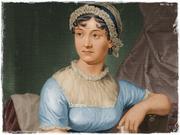
Jane Austen
1 book
Jane Austen was an English writer. Although Austen was widely read in her lifetime, she published her works anonymously. The most urgent preoccupations of her bright, young heroines are courtship and marriage. Austen herself never married. Her best-known books include [[book:pride-and-prejudice|Pride and Prejudice]] (1813) and *Emma* (1816). Virginia Woolf called Austen "the most perfect artist among women".

F. Scott Fitzgerald
1 book
Francis Scott Key Fitzgerald was an American author of novels and short stories, whose works are evocative of the Jazz Age, a term he coined himself. He is widely regarded as one of the twentieth century's greatest writers. Fitzgerald is considered a member of the "Lost Generation" of the Twenties. He finished four novels, *This Side of Paradise*, *The Beautiful and Damned*, *Tender Is the Night* and his most famous, the celebrated classic, *The Great Gatsby*. A fifth, unfinished novel, *The Love of the Last Tycoon* was published posthumously. Fitzgerald also wrote many short stories that treat themes of youth and promise along with despair and age.
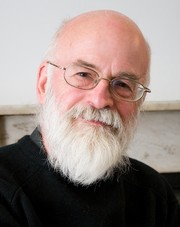
Terry Pratchett
6 series41 books
Sir Terence David John Pratchett, OBE more commonly known as Terry Pratchett, was an English novelist, known for his frequently comical work in the fantasy genre. He is best-known for his popular and long-running [[universe:discworld|Discworld]] series of comic fantasy novels. Pratchett's first novel, The Carpet People, was published in 1971, and since his first Discworld novel (The Colour of Magic) was published in 1983, he has written two books a year on average. Pratchett was the UK's best-selling author of the 1990s, and as of December 2007 had sold more than 55 million books worldwide, with translations made into 36 languages. He is currently the second most-read writer in the UK, and seventh most-read non-US author in the US. In 2001 he won the Carnegie Medal for his young adult novel The Amazing Maurice and his Educated Rodents.

William Gibson
1 series4 books
William Ford Gibson is an American-Canadian writer who has been called the "noir prophet" of the cyberpunk subgenre of science fiction. Gibson coined the term "cyberspace" in his short story "Burning Chrome" and later popularized the concept in his debut novel, [[book:neuromancer|Neuromancer]] (1984). In envisaging cyberspace, Gibson created an iconography for the information age before the ubiquity of the Internet in the 1990s. He is also credited with predicting the rise of reality television and with establishing the conceptual foundations for the rapid growth of virtual environments such as video games and the Web.