Search for characters or series


The vast multiverse conceived by Stephen King across the Dark Tower series, encompassing not only Roland Deschain's dying world but the many parallel universes connected by the Dark Tower at the centre of existence. All-World is the term Roland's people use for their own reality - a world that has moved on, its technology failing, its geography distorted, its population dwindling - but the universe extends far beyond it to include versions of our own world and countless others. The Tower itself is the linchpin of all realities, and its threatened collapse is the central concern of the entire sequence.

The Cosmere is a fictional shared universe where many of Brandon Sanderson's books take place. As a result, books set in the Cosmere share a single cosmology and underlying rules of magic, and some characters from one world will make appearances on other worlds. Despite the connections, Brandon has remained clear that one does not need any knowledge of the broader Cosmere to read, understand, or enjoy books that take place in the Cosmere. The core sequence of the Cosmere will consist of the Dragonsteel series, the Elantris trilogy, at least four eras of the Mistborn series, and The Stormlight Archive. The story of the cosmere does not include any books that reference Earth, as Earth is not in the Cosmere. The shared "creation myth" of the Cosmere revolves around Adonalsium, the power of creation, which was broken into sixteen pieces called Shards in an event known as the Shattering of Adonalsium. The Shards are effectively gods, and magic is derived from their power.

The Culture is a fictional interstellar post-scarcity civilisation or society created by the Scottish writer Iain Banks and features in a number of his space opera novels and works of short fiction, collectively called the Culture series. In the series, the Culture is composed primarily of sentient beings of the humanoid alien variety, artificially intelligent sentient machines, and a small number of other sentient "alien" life forms. Machine intelligences range from human-equivalent drones to hyper-intelligent Minds. Artificial intelligences with capabilities measured as a fraction of human intelligence also perform a variety of tasks, e.g. controlling spacesuits. Without scarcity, the Culture has no need for money; instead, Minds voluntarily indulge humanoid and drone citizens' pleasures, leading to a largely hedonistic society. Many of the series' protagonists are humanoids who have chosen to work for the Culture's diplomatic or espionage organs, and interact with other civilisations whose citizens act under different ideologies, morals, and technologies.

The Discworld is the fictional world where English writer Sir Terry Pratchett's Discworld fantasy novels take place. It consists of an interstellar planet-sized disc, which sits on the backs of four huge elephants, themselves standing on the back of a world turtle, named Great A'Tuin, as it slowly swims through space. The Disc is the setting for all forty-one Discworld novels; it was influenced by world religions which feature human worlds resting on turtles, as a setting to reflect situations on Earth, in a humorous way. The Discworld is peopled mostly by three main races: men, dwarfs, and trolls. As the novels progress, other lesser known races are included, such as dragons, elves, goblins, and pixies. Pratchett first explored the idea of a disc-shaped world in the novel Strata (1981).

The Dune universe spans tens of thousands of years of human civilisation in a far future where humanity has spread across the galaxy but banned all computers, robots, and artificial intelligence following an ancient conflict known as the Butlerian Jihad. In place of thinking machines, humanity has developed extraordinary mental and physical disciplines - the political prescience of the Bene Gesserit sisterhood, the mathematical genius of human computers called Mentats, and the space-folding navigation of the Spacing Guild. At the centre of everything is the spice melange, a substance found only on the desert planet Arrakis that extends life, expands consciousness, and makes interstellar travel possible. Control of the spice means control of the universe, and the struggle for Arrakis drives the politics, wars, and religious upheavals that define Frank Herbert's six original novels. The series begins as political intrigue and ecological science fiction, evolves into a meditation on power, prescience, and the dangers of messianic leadership, and ultimately spans millennia of human transformation.
Missing a universe?
Request a universe to be added to OpenFiction

Two hundred years from now, humanity has spread across the solar system but remains trapped within it. Earth is overcrowded and politically dominant, Mars is a century into a terraforming project that defines its culture, and the Belt is home to workers whose bodies have been reshaped by low gravity and whose relationship with the inner planets is one of economic dependency and mutual contempt. Into this tense three-way standoff comes the protomolecule: an alien substance billions of years old that does not behave like biology or technology but something in between. Its discovery drives the opening of the series; the scope of the questions it raises - about what the protomolecule is, where it came from, and what it implies about everything humanity has assumed about its place in the galaxy - widens considerably as the series unfolds. Hard science fiction with real physics, grounded politics, and a small crew on a single ship who keep finding themselves at the centre of events that dwarf them.

Joe Abercrombie's First Law World - officially called the Circle of the World - is deliberately and methodically unglamorous: a cold, wet continent divided between the Union (a corrupt parliamentary monarchy), the North (a collection of feuding clans), and the Gurkish Empire to the south, with the frozen wastes beyond the North home to something older and stranger than any of them. Magic exists but is rare, expensive, and morally compromised. Heroes exist but are not what the stories about them suggest. The First Law trilogy introduces the world through three characters whose intersecting arcs establish everything the series stands for: the idea that people don't change as much as they think they do, that institutions are self-perpetuating regardless of who runs them, and that the gap between how things are supposed to work and how they actually work is where most of human experience happens. The standalone novels - Best Served Cold, The Heroes, and Red Country - expand the world geographically and thematically while revisiting characters from the trilogy in ways that reward the longer view. The Age of Madness picks up a generation later, in a world undergoing industrialisation, and finds that progress and justice have very little to do with each other. Abercrombie is the defining voice of grimdark fantasy - a genre that applies realist pressure to epic fantasy conventions - but the First Law World is more than its reputation for bleakness. The books are funny, the characters are vivid, and the plotting is precise. The darkness is purposeful: a sustained argument that the stories we tell about power, heroism, and change are usually wrong, and that examining why they're wrong is worth the discomfort.

A fantasy world divided between the Ravkan Empire and its neighbours, where certain people are born with the ability to manipulate matter at its most fundamental level. These people are called Grisha, and their powers - over elements, living tissue, or the fabrication of materials - have made them both essential and feared. The world is politically unstable, riven by nationalism, religious suspicion of Grisha power, and the ambitions of several competing empires. At its edges sit stranger things: a fold of impenetrable darkness teeming with monsters, a city of canals and mercenary gangs, and the remnants of a civilisation that understood more about Grisha power than anyone alive. The series spans three interconnected storylines: a war epic about a girl who discovers a rare power that could change the world, a heist story following a crew of extraordinary criminals in a corrupt city-state, and a political thriller about two rulers trying to hold a fragile kingdom together, all set in the same world at roughly the same time.

A multiverse of parallel worlds connected by invisible threads of Dust - elementary particles that accumulate around conscious beings and that different cultures variously interpret as sin, dark matter, or the physical substrate of the soul. The universe is most fully realised through the world of Lyra Belacqua, an alternative Earth where the Catholic Church never lost its grip on European civilisation and every human is accompanied by a daemon - an animal-shaped external manifestation of their soul that can speak, feel, and change form until the onset of adulthood fixes its shape permanently. Pullman's universe is distinguished by the seriousness with which it treats its central questions - consciousness, free will, the nature of growing up, and the institutional tendency to confuse authority with truth. Built across six novels spanning several decades of Lyra's life, it is one of the richest and most philosophically engaged secondary world constructions in contemporary fiction.

The Malazan World is one of the most expansive and densely realised settings in epic fantasy, spanning multiple continents, thousands of years of history, and a cast of hundreds. Created by Steven Erikson and Ian Cameron Esslemont, the world is defined by its scope and complexity - ancient races who have outlived their gods, empires built and broken across geological time, and a magic system rooted in the warrens, mysterious paths of power that connect the living world to something older and stranger beneath it. At the centre of the core sequence is the Malazan Empire, a military superpower whose campaigns across the world drive much of the narrative - though the series consistently complicates any simple reading of conquest and resistance. The story is told from dozens of perspectives across thousands of miles, with characters disappearing for entire volumes before resurfacing changed, and events whose significance only becomes clear books later. The world's history is geological in scale. The T'lan Imass made a ritual choice three hundred thousand years ago that still shapes the present. The Tiste Andii have watched civilisations rise and fall with something beyond weariness. The Jaghut built a world and then dismantled it. Understanding what happened before the first page is part of reading Malazan - the present is always haunted by a past of enormous violence and consequence.

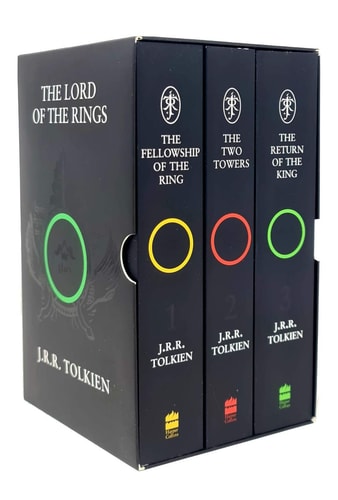
Middle-earth is the primary setting of J. R. R. Tolkien's mythological universe, a world of such internal depth and consistency that it has functioned less as a backdrop for stories than as the stories' reason for existing. Tolkien conceived it not as a invented fantasy realm but as a mythology for England, drawing on Old English, Norse, and Finnish literary traditions to construct something with the weight of genuine antiquity. The universe spans an enormous chronological range, from the creation myth of the Ainulindalë through the three Ages documented across The Silmarillion, The Hobbit, and The Lord of the Rings. Each layer adds density to the whole - languages with complete grammatical systems, genealogies running across millennia, cosmological frameworks underlying the physical world. What distinguishes Middle-earth from virtually all subsequent secondary world fantasy is the sense that the stories being told are fragments of something larger, older, and only partially recovered - an elegiac quality Tolkien built into the architecture of the world itself.

The Realm of the Elderlings is the creation of Robin Hobb, a secondary world fantasy universe built across five trilogies and a standalone novel published between 1995 and 2017. Set primarily in the Six Duchies, the Bingtown Trader coast, and the Rain Wilds, it is a universe defined less by its world-building than by the depth and honesty of its character work - Hobb's sustained examination of what it costs to live an exceptional life in a world that does not reward exceptionalism cleanly. Magic in this universe takes several forms - the Skill, a telepathic ability used by the Farseer royal line; the Wit, a bond between humans and animals regarded with suspicion and fear; and the mysterious transformative power of the Rain Wilds that shapes both its human inhabitants and the living ships of the Bingtown Traders. Dragons, Elderlings, and the ancient civilisation that preceded the current world provide a mythological depth that reveals itself gradually across the full sequence.

A modern fantasy world built on the premise that the gods of every major mythology are real, immortal, and still active in human affairs. The Greek and Roman gods relocated to America when it became the seat of Western civilisation. The Egyptian gods never left the world at all. The Norse gods operate from a network of worlds connected to Scandinavia and beyond. In each case, the children of gods walk among ordinary humans, inheriting powers and problems in equal measure. Beginning with Percy Jackson and the Olympians, Rick Riordan's interconnected series spans five separate story lines covering Greek, Roman, Egyptian, and Norse mythology, with characters crossing between them as the scope expands. What holds it together is less the shared cosmology than the shared sensibility: mythology treated as living history rather than dusty legend, heroes who are funny and frightened and loyal, and a consistent argument that the monsters worth fighting are usually the ones who claim to be on your side.

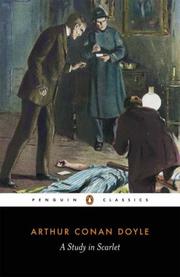
The Sherlock Holmes universe is the creation of Arthur Conan Doyle, comprising four novels and fifty-six short stories published between 1887 and 1927. Set primarily in late Victorian and Edwardian London, it follows the consulting detective Sherlock Holmes and his companion Dr John Watson across a career spanning several decades. The universe is defined by its central dynamic - Holmes's extraordinary powers of observation and deductive reasoning applied to cases ranging from the mundane to the genuinely bizarre - and by Watson's role as narrator and audience surrogate, whose admiring but grounded perspective mediates Holmes's more alien qualities for the reader. London itself functions as a character, its fog, gaslight, and social stratification providing both atmosphere and the conditions that make Holmes's work necessary. The fixed, closed canon and its public domain status have made it one of the most studied and adapted fictional universes in existence.

The Sprawl is William Gibson's interconnected fictional setting spanning his landmark cyberpunk trilogy and several short stories from the 1980s. The name refers to the Boston-Atlanta Metropolitan Axis, a vast urban corridor stretching along the eastern seaboard of a near-future United States, though the stories range across the globe and even into orbital space. The universe is defined by its vision of a hyper-connected, corporate-dominated world where hackers jack into cyberspace - a shared digital hallucination - while street-level hustlers navigate a gritty, technology-saturated underworld. Megacorporations wield more power than governments, artificial intelligences push against the limits of their constraints, and the line between human and machine blurs through cybernetic modification. Gibson's Sprawl stories are widely credited with defining the cyberpunk genre and introducing concepts - cyberspace, ICE, the matrix - that shaped how an entire generation imagined the digital future.

Temerant is the world of Patrick Rothfuss's Kingkiller Chronicle, a secondary world fantasy universe built with unusual attention to internal consistency across its mythology, music, and systems of magic. The setting is anchored in the Commonwealth and the surrounding nations, though its geography is less central to the work than its intellectual architecture. The most fully realised element of Temerant's worldbuilding is sympathy, a magic system governed by laws closer to physics than enchantment, requiring concentration, understanding of underlying principles, and a willingness to bear personal cost. Alongside it sit naming, a rarer and more mysterious discipline, and the Adem mercenary culture with its own codified philosophy of music and motion. Temerant's mythology is layered and deliberately incomplete, with the Amyr, the Chandrian, and the shadowy Fae realm offering more questions than answers. Rothfuss has constructed a world that rewards close reading, though the long wait for its third volume has tested the patience of even devoted readers.

The world of Scott Lynch's Gentleman Bastard sequence, centred on the city-states of the Therin Throne's former empire - among them Camorr, Tal Verrar, and Karthain - built atop the ruins and elderglass structures left by a vanished people called the Eldren. The continent's city-states are defined by their commerce, their political intrigue, and the criminal hierarchies that operate beneath their official structures. Lynch's world-building is dense with historical texture and mercantile detail, and the mystery of the Eldren civilisation provides a mythological underpinning whose full implications remain unexplored across the published novels.

The world of Robert Jordan's epic sequence has no canonical name - its inhabitants simply call it the world - but it is one of the most elaborately constructed secondary worlds in fantasy fiction. Shaped by the Wheel of Time itself, which spins the Pattern of Ages and weaves the lives of men and women into its design, it is a world haunted by a previous Age of legend and by the knowledge that the Dark One, imprisoned at the moment of creation, is weakening his bonds. The one Power, the various nations of the Westlands, the Aiel Waste, and the continent of Seanchan together form a geography of extraordinary depth and internal consistency.

The fictional universe created by J.K. Rowling, encompassing the seven Harry Potter novels, the Fantastic Beasts film series, and a vast body of supplementary material. Built around the central conceit of a hidden magical society existing alongside the ordinary world, the Wizarding World is one of the most expansive and commercially successful fictional universes ever created. Its institutions - Hogwarts School of Witchcraft and Wizardry, the Ministry of Magic, Diagon Alley, Azkaban - have become as culturally familiar as any setting in modern fiction. The universe spans stories set across multiple centuries and continents, though its heart remains the Britain of the 1990s in which Harry Potter came of age. The series has been translated into more than 80 languages and adapted into eight films, a stage play, and an ongoing television series.

The world of A Song of Ice and Fire spans two vast continents - Westeros, a feudal landmass divided into the Seven Kingdoms, and Essos, a diverse continent of free cities, ancient civilisations, and vast grasslands to the east. The story takes place in an era of political upheaval following a rebellion that overthrew the three-hundred-year Targaryen dynasty, replacing it with a fragile new order that quickly fractures into civil war. The world is defined by its unpredictable seasons - summers and winters that last years or even decades - and by the growing threat of the Others, an ancient enemy stirring beyond the great ice Wall in the far north. Magic, long thought faded from the world, begins to return as dragons are reborn and old powers awaken. George R.R. Martin began the series in 1996 with A Game of Thrones, originally planning a trilogy that has since expanded to a planned seven volumes, five of which have been published. The series has sold over 90 million copies worldwide and was adapted into the HBO television series Game of Thrones (2011 - 2019).