


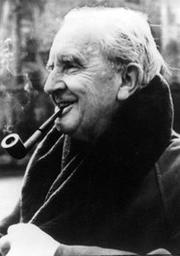
J. R. R. Tolkien
Life Events
| Date | Event | Details |
|---|---|---|
25 March | Commemoration (recurring) | Tolkien Reading Day is 25 March, chosen by the Tolkien Society to mark the date of the culminationation of the events of the Third Age in The Lord of the Rings. It has been observed annually since 2003. The theme changes each year - the Society announces it in advance and encourages fans, schools, libraries, and bookshops to hold readings, events, and discussions. Past themes have included friendship, hope, and the natural world. The date itself is significant within the legendarium. 25 March in the Shire Reckoning is the date Frodo and Sam reached the Crack of Doom in Mount Doom in the year 3019 of the Third Age. Tolkien himself considered 25 March an important date, with roots in its significance in the Christian calendar as the traditional date of the Annunciation and also of the Crucifixion in some traditions - themes of sacrifice and eucatastrophe that run through his work. |
3 January 1892 | Birth | Born in Bloemfontein, South Africa, J.R.R. Tolkien lost both parents before he was thirteen and found refuge in language, eventually becoming Professor of Anglo-Saxon at Oxford. He began writing the stories that would become Middle-earth's legendarium while recovering from trench fever in a military hospital in 1916. |
2 September 1973 | Death | J. R. R. Tolkien died in Oxford at 81 and was buried alongside his wife Edith in Wolvercote Cemetery, their headstone inscribed with the names Beren and Lúthien - the lovers from his mythology whose story mirrored their own. His son Christopher spent the following decades publishing the vast body of unpublished work he left behind. |
1974 | Award Won | Gandalf Award Grand master of fantasy |
2013 | Award Won | Science Fiction Hall of Fame |
Commemoration (recurring)25 March
Tolkien Reading Day is 25 March, chosen by the Tolkien Society to mark the date of the culminationation of the events of the Third Age in The Lord of the Rings. It has been observed annually since 2003. The theme changes each year - the Society announces it in advance and encourages fans, schools, libraries, and bookshops to hold readings, events, and discussions. Past themes have included friendship, hope, and the natural world. The date itself is significant within the legendarium. 25 March in the Shire Reckoning is the date Frodo and Sam reached the Crack of Doom in Mount Doom in the year 3019 of the Third Age. Tolkien himself considered 25 March an important date, with roots in its significance in the Christian calendar as the traditional date of the Annunciation and also of the Crucifixion in some traditions - themes of sacrifice and eucatastrophe that run through his work.
Birth3 January 1892
Born in Bloemfontein, South Africa, J.R.R. Tolkien lost both parents before he was thirteen and found refuge in language, eventually becoming Professor of Anglo-Saxon at Oxford. He began writing the stories that would become Middle-earth's legendarium while recovering from trench fever in a military hospital in 1916.
Death2 September 1973
J. R. R. Tolkien died in Oxford at 81 and was buried alongside his wife Edith in Wolvercote Cemetery, their headstone inscribed with the names Beren and Lúthien - the lovers from his mythology whose story mirrored their own. His son Christopher spent the following decades publishing the vast body of unpublished work he left behind.
Award Won1974
Gandalf Award
Grand master of fantasy
Award Won2013
Science Fiction Hall of Fame
Reading Orders
Universes (1)
Series (1)
Books (9)
The Hobbit
1937
Bilbo Baggins is a hobbit who lives a quiet, comfortable life in his hole at Bag End, with no desire for adventure. That changes when the wizard Gandalf and thirteen dwarves led by Thorin Oakenshield arrive at his door and recruit him as their burglar for a quest to reclaim the dwarves' ancestral home under the Lonely Mountain from the dragon Smaug. What follows is a journey across Middle-earth - through troll-haunted forests, goblin tunnels beneath the Misty Mountains, the wood-elves' halls of Mirkwood, and the desolation surrounding the dragon's lair. Along the way, Bilbo discovers a mysterious ring that makes its wearer invisible, an apparently minor find that will prove to be the most consequential discovery in the history of Middle-earth. The Hobbit is Tolkien's first published work set in his legendarium and serves as the natural entry point to his world.
The Fellowship of the Ring
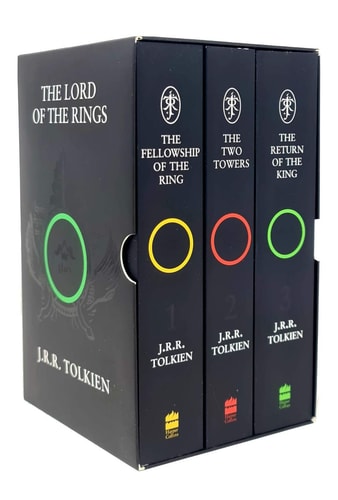
The Lord of the Rings
1954
In the Shire, a quiet corner of Middle-earth where hobbits live comfortable and unadventurous lives, young Frodo Baggins inherits a plain gold ring from his elderly cousin Bilbo. When the wizard Gandalf reveals it to be the One Ring - forged by the Dark Lord Sauron to dominate all of Middle-earth - Frodo must leave everything he knows and carry it to the only place it can be destroyed: the fires of Mount Doom in the heart of Mordor. He is joined by eight companions - hobbits, men, an elf, a dwarf, and a wizard - who form the Fellowship of the Ring. The first volume of J.R.R. Tolkien's The Lord of the Rings, a journey from the familiar comforts of home into a world of ancient beauty and mounting peril.