

Sherlock Holmes
Reading Order
2 reading orders available - see all →
Series (2)
The Novels
4 books
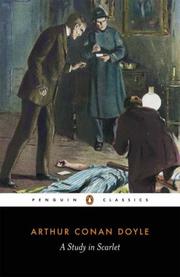
The four Sherlock Holmes novels form the structural backbone of the canon, introducing the universe's central characters and establishing its most substantial plots. A Study in Scarlet presents the first meeting of Holmes and Watson and sets out the consulting detective's method in full; The Sign of Four deepens their partnership while introducing one of the canon's more personally consequential cases; The Hound of the Baskervilles, the most celebrated and self-contained of the four, sends Holmes and Watson to the Devon moors for the canon's most atmospheric investigation; and The Valley of Fear, the final novel, returns to the theme of organised crime and secret societies that runs through the earlier work. The novels reward reading in publication order but The Hound of the Baskervilles functions as a natural entry point for newcomers encountering Holmes for the first time.
The Short Stories
5 books
Characters (25)
| Name | Aliases | Role |
|---|---|---|
 Dr John H. Watson Army surgeon invalided home from Afghanistan who becomes Sherlock Holmes's companion, lodger, and chronicler. Steady, decent, and possessed of considerable courage, he serves as both the practical counterweight to Holmes's eccentricity and the reader's point of entry into a world that would otherwise be entirely alien. Narrator of the overwhelming majority of the canonical stories. | John Watson, Dr Watson, John H. Watson | Protagonist |
 Sherlock Holmes The world's only consulting detective, operating from 221B Baker Street, London. Possessed of extraordinary powers of observation and deductive reasoning, he applies a rigorous scientific method to criminal investigation while remaining largely indifferent to conventional social expectations. Capable of brilliant warmth and profound coldness in equal measure, his partnership with Dr Watson is the central relationship of the canon. | Mr Sherlock Holmes, Sigerson, Captain Basil | Protagonist |
Abe Slaney An American criminal whose pursuit of a woman from his past brings violence to a quiet Norfolk farm in The Adventure of the Dancing Men. His use of a coded message system based on stick figures dancing - the dancing men of the title - gives Holmes one of his most celebrated cryptographic challenges. Dangerous and entirely without scruple about pursuing what he considers his by prior claim. | Antagonist | |
 Colonel Sebastian Moran Former Colonel of the First Bangalore Pioneers and big game hunter, described by Holmes as the second most dangerous man in London after Moriarty. Chief of staff to Moriarty's criminal organisation. Appears in The Adventure of the Empty House. | Colonel Moran, Sebastian Moran | Antagonist |
Grimesby Roylott The last scion of an ancient Surrey family whose violent temper makes him one of the more physically imposing figures in the canon. A trained physician who spent years in India, he returned with exotic animals collected during his service abroad. The peculiar circumstances of his household at Stoke Moran are what Holmes is asked to investigate in The Adventure of the Speckled Band. | Dr Roylott | Antagonist |
Jack Stapleton A naturalist and amateur entomologist living on the edge of the great Grimpen Mire, near the Baskerville estate in The Hound of the Baskervilles. Affable, well-read, and disarmingly enthusiastic about the rare butterflies of Dartmoor, he and his sister Beryl quickly take an interest in the new heir to Baskerville Hall. | Rodger Baskerville | Antagonist |
Jefferson Hope A physically powerful American cab driver who comes to Holmes's attention during the investigation of a murder in Lauriston Gardens. His history in the Utah Territory and his connection to the victims of the case only becomes clear as Holmes pursues his inquiries. Appears in A Study in Scarlet only. | Antagonist | |
John Clay A highly intelligent and audacious criminal of aristocratic bearing - described by Holmes as occupying the fourth smartest position in London. A man of good family and considerable gifts entirely devoted to crime, whose particular ingenuity in the Red-Headed League affair gives that case one of the canon's more enjoyable solutions. | Antagonist | |
Jonathan Small A one-legged former soldier whose history in India and subsequent years of imprisonment connect him to the mystery at the heart of The Sign of Four. His full story, told in the novel's final chapter, reframes much of what has preceded it. Appears in The Sign of Four only. | Antagonist | |
 Professor James Moriarty A former Professor of Mathematics turned criminal mastermind, described by Holmes as the Napoleon of Crime - the organising intelligence behind much of London's serious criminality. Appears directly in only a handful of stories but casts a shadow across the later canon. | The Napoleon of Crime, Professor Moriarty | Antagonist |
Ted Baldwin An American whose appearance at Birlstone Manor is the inciting incident of the murder investigation at the centre of The Valley of Fear. His connection to John Douglas and to the events described in Part 2 of the novel becomes clear as Holmes's investigation progresses. Appears in The Valley of Fear only. | Antagonist | |
Tonga An Andaman Islander who became the devoted companion of Jonathan Small, accompanying him to England. His presence aboard the Aurora during the Thames chase is one of the more startling moments in the novel. Appears in The Sign of Four only. | Antagonist | |
Beryl Stapleton The woman presented as the sister of the naturalist Stapleton at Merripit House on Dartmoor. Her nationality, the particular nature of her position in the household, and the genuinely sympathetic warmth she shows toward Sir Henry Baskerville are at the heart of the difficult and slowly unfolded solution of the Baskerville case. Appears in The Hound of the Baskervilles only. | Miss Stapleton, Beryl Garcia | Supporting |
Dr James Mortimer A country doctor and man of science who brings the Baskerville case to Holmes, having witnessed the death of Sir Charles Baskerville and found evidence that defies rational explanation. Scholarly, nervous, and genuinely frightened, he is the reader's introduction to the Dartmoor world of The Hound of the Baskervilles and one of its more sympathetically drawn supporting figures. | James Mortimer, Dr Mortimer | Supporting |
Hilton Cubitt A Norfolk squire of old family who comes to Holmes with a curious problem - a series of stick figure drawings appearing on his property that have thrown his American wife into a state of terror she refuses to explain. Straightforward, decent, and entirely out of his depth in the situation his wife's past has brought to his door. Appears in The Adventure of the Dancing Men only. | Supporting | |
 Inspector Hopkins A young and promising Scotland Yard inspector whom Holmes regards as one of the best of the official force. Appears across several cases in The Return of Sherlock Holmes, where he frequently brings difficult cases to Holmes while remaining open to methods that his more senior colleagues would dismiss. Represents a younger, more adaptable face of official detection. | Stanley Hopkins | Supporting |
 Inspector Lestrade Scotland Yard's most prominent inspector in the canon and Holmes's most frequent professional contact within the official police. Tenacious and not without competence, but habitually out of his depth on the cases that matter most, he represents the institutional approach to detection that Holmes consistently outpaces. His relationship with Holmes evolves from grudging tolerance to genuine respect across the canon. | G. Lestrade, Inspector G. Lestrade | Supporting |
 Irene Adler An American opera singer and adventuress who appears in a single story, A Scandal in Bohemia, but earns a permanent place in the canon. Referred to thereafter simply as The Woman. Her prominence in adaptation far exceeds her actual canonical presence, but her impact on Holmes's characterisation is genuine and lasting. | The Woman, Irene Norton | Supporting |
John Douglas The owner of Birlstone Manor whose apparent murder brings Holmes and Watson to Sussex at the opening of The Valley of Fear. A man of considerable physical presence and personal courage whose history proves considerably more complex than it initially appears. Appears in The Valley of Fear only. | Birdy Edwards | Supporting |
 Mary Morstan Introduced in The Sign of Four as a client of Holmes and Watson. Quietly courageous and clear-headed in difficult circumstances, she is described as small, fair, and refined. | Miss Morstan | Supporting |
Showing 1 to 20 of 25 items
Page 1 of 2
Groups (2)
| Name | Type |
|---|---|
| Moriarty's Organisation | Organisation |
| Scotland Yard | Organisation |