The Road
Chapters - Cormac McCarthy
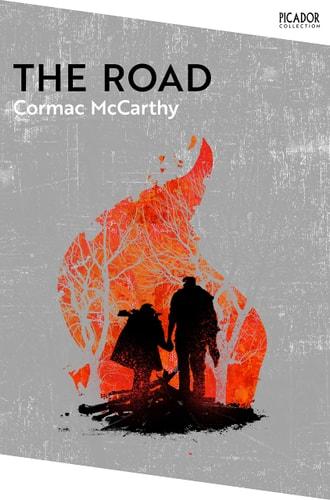
Section: Into the Wasteland
The Man and the Boy wake in the cold woods of a post-apocalyptic wasteland, pushing a shopping cart south along an ash-covered road. They cross a bridge blocked by a jackknifed tractor-trailer and discover human bodies inside the trailer. The landscape is charred and lifeless, fires still burning in the distance, the sky perpetually grey with soot.
They encounter a man struck by lightning, shuffling burned and ruined along the road. The Boy begs to help him, but the Man insists they cannot. The Boy stops speaking for a time, grieving the decision. The Man discards his wallet and a photograph of his wife, shedding the last tokens of the old world.
Flashbacks reveal the moment of the catastrophe - clocks stopping at 1:17, a shear of light and concussions - and the Man's wife, who gave birth to the Boy in the aftermath. Unable to endure the horror of their existence, she eventually walked into the darkness with a flake of obsidian, choosing death over the world that remained. The Man and Boy continue south, the Boy carrying a small toy truck, their only compass the fading hope that the south may be warmer.
POV: The Man·On page: The Boy, The Lightning-Struck Man
Section: The Father's House
The Man leads the Boy to a town where they search desperately for food. They find almost nothing in the ransacked stores and houses. The Boy spots another child across the road - a boy about his age in an oversized wool coat - and runs after him, but the child vanishes. The Man seizes the Boy in a panic, and the Boy sobs, wanting to help the other child.
They press on, eating cornmeal cakes made from rat-gnawed meal sifted through window screen. The Boy keeps asking about the little boy they saw, wanting to go back for him, but the Man refuses. At a crossroads, the Man studies the map while the Boy pleads softly to return. They sleep in a woodlot with no fire, the Boy eventually drifting off in his father's arms.
The Man reflects on a dog that once followed them, and the Boy's memory of it. They eat the last of their raisins and face the growing reality of starvation. The countryside offers nothing - looted, ransacked, stripped of every crumb. The boy asks if they would ever eat anybody, and the Man assures him they would not, because they are the good guys, carrying the fire.
POV: The Man·On page: The Boy, The Boy's Mother
Section: The Road Gang
The Man and the Boy hear a diesel truck approaching and hide in an old roadcut off the main highway. A convoy of armed men passes - some wearing canister masks, one in a biohazard suit, carrying clubs and lengths of pipe. When one of the gang members comes off the road to relieve himself, he discovers the Man and Boy hiding.
A tense confrontation unfolds. The Man holds the gang member at gunpoint, but the man is wiry and quick. He lunges for the Boy, grabs him, and holds a knife to his throat. The Man fires the pistol, killing the attacker with a shot to the forehead. He scoops up the gore-covered Boy and runs, carrying him on his shoulders through the darkening woods.
They flee through the night, freezing and terrified, with only a single round left in the revolver. The Man holds the trembling Boy, wrapping him in the only blanket. The next morning they find their cart plundered - the gang has taken almost everything. Near the campsite, the Man discovers boiled human bones. They push on, building a fire under a bridge, where the Man washes the dead man's brains from the Boy's hair. The Man carves the Boy a flute from roadside cane, and the Boy plays a formless music as they walk.
Section: The Marching Army
The Man and the Boy come upon a stone wall decorated with a frieze of severed human heads - dried, tattooed, adorned with gold rings. In the morning, the Man wakes to see a marching column four abreast on the road: an army in tennis shoes carrying pipes threaded with chains, spears hammered from truck springs, followed by wagons drawn by slaves in harness, pregnant women, and chained catamites in dog collars. The Man and Boy lie still and unseen as this terrible procession passes.
Snow begins to fall heavily. They struggle on, the Boy stumbling and exhausted. The Man abandons the cart in a field, wraps the Boy's feet in cut-up coats and plastic, and they press forward through drifts. A cedar wood offers brief shelter, but in the night the frozen trees begin crashing down around them. They burrow beneath a fallen trunk and wait out the destruction.
The next morning they search for the cart in knee-deep snow. The Boy collapses and has to be carried. Two men pass on the road but do not find them. Starving and desperate, they come upon a grand house with white Doric columns. The Boy begs not to enter, but they have no choice - they have not eaten in five days.
Section: The Cannibal House
They enter the once-grand house. In the dining room, a great heap of clothing and shoes is piled in the corner. Mattresses and bedding are arranged before the hearth. A cord runs from a window to a brass bell - an alarm system. In a small pantry, the Man finds a locked hatch in the floor. Despite the Boy's terrified pleas, he pries it open.
In the cellar, the Man lights his lighter and discovers naked people huddled against the back wall, shielding their faces. On a mattress lies a man with his legs gone to the hip, the stumps blackened and burned. The captives beg for help. The Man grabs the Boy and rushes upstairs just as four bearded men and two women appear crossing the field toward the house.
They flee through the front door and down through dead cane to the road, then into the woods. The Man pushes the revolver into the Boy's hands and instructs him how to use it on himself if they are found. They lie in the leaves all through the long dusk and into the dark, hearing hideous shrieks from the house. In the black of night they slip away, stumbling blind through the woods, eventually collapsing in a pine grove where the Man finds apples in an old orchard and water in a cistern - salvation at the edge of death.
Section: The Bunker
Exploring a house near a garden shed, the Man notices something odd about the ground. He digs with a spade and uncovers a plywood hatch sealed with a padlock. The Boy is terrified, begging him not to open it, remembering the horror of the last cellar. The Man fashions an oil lamp from a beer bottle and gasoline, and they descend together.
Instead of horror, they find a survivalist's bunker: crate upon crate of canned goods - tomatoes, peaches, beans, hams, corned beef - hundreds of gallons of water, paper goods, blankets, soap, toothpaste. The Man weeps. They eat pears and peaches, licking the rich syrup from their spoons. The Boy asks to thank the people who stored the supplies.
They stay several days, bathing in heated water, eating sumptuous meals of ham and biscuits and scrambled eggs, drinking coffee. The Man whittles fake bullets from a branch to fill the empty chambers of the revolver. He dismantles part of a camp stove to make it portable. They find a grocery cart in town and load it with as much as it will hold, then set out again on the road, the Boy sweeping the path ahead with a broom.
Section: Ely the Wanderer
Late in the day they overtake an old man shuffling along the road - small, bent, tapping with a peeled stick for a cane, a filthy towel tied under his jaw. He collapses in the road at the sight of them, terrified. The Boy touches his shoulder gently and tells his father the man is scared. Against the Man's instincts, the Boy insists on feeding him.
They give the old man a tin of fruit cocktail, then camp together for the night. The old man says his name is Ely, though he later admits that is not his real name - he does not want anyone to know it. They share beef stew, crackers, and coffee. Around the fire, Ely speaks in cryptic, philosophical terms: there is no God, he says, and we are his prophets. He claims he always knew something like this was coming.
In the morning, they argue about what to give Ely before parting. The Boy sits in the ashes by the road, upset that they cannot do more. Ely will not thank them or wish them luck. As they set out, the Man looks back to see the old man dwindling on the road behind them like some storybook peddler from an antique time. The Boy never looks back. Later, their gas tank runs empty - the valve was left open - and they press on into the cold without fire.
Section: Nearing the Coast
The Man's cough worsens, and he falls ill with fever for several days. The Boy tends to him in the woods, whispering for him not to go when he stumbles out into the darkness to cough. The Man dreams of the vanished world - a gray day in a foreign city, a library of charred books. Three, four days pass in delirium.
When they resume walking, they cross a landscape of burnt firestorms - miles of blackened earth, figures half-mired in melted blacktop. The Boy, strangely calm, tells his father the dead are already in his head. They eat the last of their provisions. Someone seems to be following them, and they hide to observe: a group of four including a pregnant woman passes in the darkness, heading south.
The country changes from pine to live oak and magnolia, all dead. They approach the coast, the Man mapping their progress with a telephone directory. The Boy asks if the sea will be blue. The Man says it used to be. Long days of open country with ash blowing over the road, their food nearly gone, the Man coughing blood into his mask.
Section: The Sea
They come around a turn in the road and see the ocean - gray, cold, leaden, nothing like the blue sea the Boy had hoped for. A tanker lies half-careened on the tidal flats. No gulls, no shorebirds. The Boy hides his disappointment. They camp against a driftwood log on the beach, and the Boy strips naked and runs screaming into the freezing surf, then comes out blue and crying.
The Man discovers a sailboat hull lying half-over in the shallows. He swims out to it naked in the freezing water and explores the cabins. The vessel, the Pajaro de Esperanza from Tenerife, has been ransacked by the sea itself. He finds canned goods, clothing, foul-weather gear, rope, tools, a brass sextant, and ultimately a hidden compartment containing a flare pistol with eight rounds. He makes multiple trips, ferrying supplies ashore.
They shoot a flare into the murky sky as a celebration. The Boy watches the magnesium tendrils drift down and asks if God could see it. Days later, the Boy falls ill with a high fever. The Man is terrified, crushing aspirin into sugar water, holding him through the night. He whispers his promise: I will not send you into the darkness alone. After several desperate days, the Boy's fever breaks and he begins to recover.
Section: The Thief
Coming back to camp, the Man sees bootprints in the sand. Their tarp, blankets, water, food, shoes, and the cart itself - everything has been stolen. He tracks the thief down the road and they overtake him at dusk: a scrawny, sullen outcast from a commune, the fingers of his right hand cut away, pushing the loaded cart with a butcher knife.
The Man forces the thief at gunpoint to strip naked in the road - his clothes, his shoes, everything placed in the cart. The Boy sobs and begs his father to stop. The Man is ruthless, leaving the thief exactly as the thief would have left them. They wheel the cart away while the Boy cries and looks back at the naked, shivering figure.
The Boy refuses to stop crying. He sits in the road and will not move. The Man goes back but cannot find the thief. They pile the man's clothes and shoes in the road with a rock on top, a gesture that cannot undo what was done. That night the Boy speaks the truth the Man cannot face: But we did kill him. The Man tries to get the Boy to talk, to tell stories, but the Boy says the stories are not true - in them, they are always helping people, and they do not help people.
Section: The Bowman
They follow the coast road south, the Man limping, coughing, growing weaker. In a small port town they search the docks and find nothing. As they pass through the last buildings at the edge of town, something whistles past the Man's head. An arrow. He grabs the Boy and falls on top of him. A second arrow cuts a deep gash in his leg above the knee.
He sees a man in an upper window drawing a bow and fires the flare pistol. The flare rockets upward in a white arc and hits the window. The bowman screams. The Man reloads and limps across the street into the house. Upstairs he finds a woman holding the burned man, cursing him. He takes no further action.
In a store building at the end of town, the Man sutures his own wound with a hooked needle and silk thread from the first-aid kit while the Boy watches. They spend days recovering. The Boy tells his father that his happy stories are not true, that real life is pretty bad. The Man's leg heals enough to walk, and they set out again along the sandy coast road, the landscape increasingly devastated by storms.
POV: The Man·On page: The Boy, The Bowman
Section: The End of the Road
The Man deteriorates rapidly. He coughs blood, staggers, can barely push the cart. The Boy watches him with terrible knowledge. They abandon the cart in a field of storm wreckage and continue on foot with a canvas bag and a small suitcase. The Man can go no further. He lies down at a crossroads where firestorms have flattened the dead trees, and he knows this is where he will die.
He tells the Boy to keep going south, to find the good guys, to carry the fire. The Boy weeps and begs to stay. The Man says his heart belongs entirely to the Boy, that he was always the best guy. He asks the Boy to practise talking to him after he is gone. That night the Man dies in his sleep. The Boy sits with him for three days, crying, saying his name.
On the third day, a man appears on the road - a veteran with a shotgun, a scarred face, wearing a ski parka. He tells the Boy he can come with his family. He has a little boy and a little girl. He does not eat people. He is carrying the fire. The Boy says goodbye to his father, covering him with a blanket and promising to talk to him every day. The woman in the new family holds the Boy and tells him the breath of God passes from man to man through all of time.
POV: The Man·On page: The Boy, The Veteran, The Woman (Veteran's Wife)