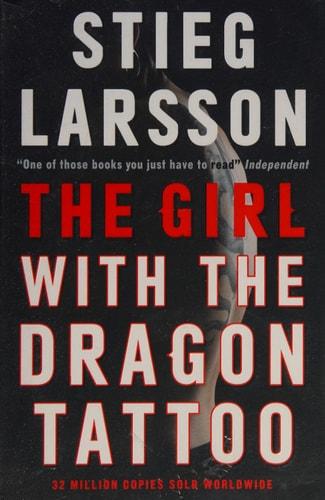
The Girl with the Dragon Tattoo
29 chapters - View chapters and summaries
Characters (18)
| Name | Aliases | Role |
|---|---|---|
Lisbeth Salander A brilliant, asocial researcher and hacker with a photographic memory and exceptional capacity for pattern recognition. Declared legally incompetent as a teenager following a confrontation with her father Zalachenko, she was institutionalised and subjected to abuse by the state. Fiercely independent, she operates by her own moral code and does not forgive those who harm her or the vulnerable. Bisexual, heavily tattooed, and lives almost entirely off the grid by choice. | The Girl with the Dragon Tattoo, Wasp, Irene Nesser | Protagonist |
Mikael Blomkvist Co-owner and publisher of Millennium magazine and an investigative journalist with a reputation for exposing financial corruption. Convicted of libel against financier Hans-Erik Wennerstrom at the opening of the first novel, he accepts Henrik Vanger's commission to investigate the disappearance of Harriet Vanger as a way to find evidence that will clear his name. Principled, persistent, and given to affairs with women he works with. | Kalle Blomkvist | Protagonist |
Nils Bjurman Lisbeth Salander's court-appointed guardian after Holger Palmgren's stroke. A lawyer who abuses his position of power. | Antagonist | |
Dragan Armansky Director of Milton Security, a private security firm. Lisbeth Salander's employer and one of the few people she considers an ally. Has a protective, quasi-paternal relationship with Salander. Of Armenian origin, based in Stockholm. | Supporting | |
Erika Berger Editor-in-chief of Millennium magazine and Mikael Blomkvist's long-term lover and closest friend. Married to artist Greger Beckman in an open relationship. Calm under pressure, politically astute, and fiercely loyal to both Blomkvist and the magazine. Takes a position as editor of the newspaper SMP in the third book. | Supporting | |
Henrik Vanger Elderly patriarch of the Vanger industrial dynasty. Obsessed for four decades with the disappearance of his great-niece Harriet from Hedeby Island in 1966. Hires Mikael Blomkvist to investigate, offering damaging evidence against Wennerstrom as payment. | Supporting | |
Holger Palmgren Lisbeth Salander's first court-appointed guardian and the closest thing she has to a father figure. A retired lawyer who genuinely cared for her and fought to protect her rights. Suffered a stroke and was replaced by Bjurman. Recovers slowly and returns in the third book to lead her legal defence. | Supporting | |
Annika Giannini Blomkvist's sister, a lawyer specialising in family law and women's rights. | Minor | |
Cecilia Vanger Henrik's niece, a school teacher and daughter of Harald Vanger, with whom Blomkvist has a brief affair. | Minor | |
Christer Malm Art director and part-owner of Millennium magazine. | Minor | |
Dirch Frode Henrik Vanger's elderly lawyer who recruits Blomkvist for the Harriet investigation. | Minor | |
Gustaf Morell Retired detective superintendent who investigated Harriet Vanger's disappearance and became obsessed with the case of the pressed flowers. | Minor | |
Hans-Erik Wennerström Swedish billionaire financier and stock-market speculator who sued Blomkvist for libel and is later exposed as a criminal. | Minor | |
Harald Vanger Henrik's ninety-two-year-old brother, a reclusive former doctor with a Nazi past. | Minor | |
Harriet Vanger Henrik Vanger's grandniece who disappeared in 1966 and was believed dead, but is later found alive in Australia. | Minor | |
Isabella Vanger Harriet and Martin's mother, a vain and irresponsible woman of German origin. | Minor | |
Janne Dahlman Managing editor of Millennium who is suspected of being disloyal and leaking information. | Minor | |
Martin Vanger CEO of the Vanger Corporation and Harriet's brother, who is revealed to be a serial killer continuing his father's legacy. | Minor |
Groups (1)
| Name | Type |
|---|---|
| Millennium Magazine | Organisation |
History
| Date | Event | Details |
|---|---|---|
August 2005 | Publication | The novel was a major international success on publication, winning the Glass Key Award in 2006, the Anthony Award for Best First Novel, and the Galaxy British Book Awards Crime Thriller of the Year. Critics praised its intricate plotting and social ambition - Publishers Weekly gave it a starred review, calling it "at once a strikingly original thriller and a vivisection of Sweden's dirty not-so-little secrets." The Guardian later placed it at number 98 in its list of the 100 Best Books of the 21st Century. The most common caveat was a slow opening, with reviewers noting the book rewards patience. Lisbeth Salander dominated critical discussion, as she would throughout the series. |
PublicationAugust 2005
The novel was a major international success on publication, winning the Glass Key Award in 2006, the Anthony Award for Best First Novel, and the Galaxy British Book Awards Crime Thriller of the Year. Critics praised its intricate plotting and social ambition - Publishers Weekly gave it a starred review, calling it "at once a strikingly original thriller and a vivisection of Sweden's dirty not-so-little secrets." The Guardian later placed it at number 98 in its list of the 100 Best Books of the 21st Century. The most common caveat was a slow opening, with reviewers noting the book rewards patience. Lisbeth Salander dominated critical discussion, as she would throughout the series.