The Amber Spyglass
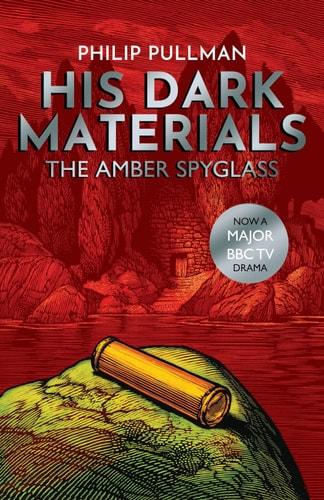
38 chapters - View chapters and summaries
Characters (21)
| Name | Aliases | Role |
|---|---|---|
Lyra Belacqua A girl raised among the scholars of Jordan College, Oxford, in a world where every human soul takes the form of an external animal companion called a daemon. Reckless, gifted at deception, and possessed of an instinctive ability to read the alethiometer, she embarks on a journey north to rescue missing children that becomes something far larger - a journey that places her at the centre of a war for the nature of consciousness across all worlds. | Lyra Silvertongue, Lizzie Brooks | Protagonist |
Will Parry A boy from our world who has spent years caring for his mentally fragile mother while searching for his missing father. His discovery of a window into the abandoned city of Cittagazze brings him into Lyra's world and eventually makes him the bearer of the subtle knife - a blade capable of cutting windows between any two worlds. Quiet, self-contained, and accustomed to carrying adult burdens, he forms a partnership with Lyra that becomes the emotional centre of the trilogy. | Will | Protagonist |
Metatron The Regent of the Authority - the most powerful angel in existence, who has effectively supplanted the ancient and fading god-figure and rules the Kingdom of Heaven in his stead. The primary supernatural antagonist of The Amber Spyglass. | The Regent | Antagonist |
Balthamos An angel of relatively low rank who, along with Baruch, is tasked with guiding Will in The Amber Spyglass. Acerbic, proud, and grief-stricken. | Supporting | |
Father MacPhail The gaunt, fanatical President of the Consistorial Court of Discipline, a Scotsman who exercises brutal self-discipline. He authorises both Father Gomez's assassination mission and the bomb powered by intercision that targets Lyra. | Supporting | |
Iorek Byrnison An armoured bear - one of the panserbjorne, a race of intelligent polar bears who craft and wear their own soul in the form of armour - who has been exiled from Svalbard and reduced to working as a blacksmith in Trollesund when Lyra finds him. His friendship with Lyra grows into one of the trilogy's most steadfast and consequential alliances. | Major | |
King Ogunwe An African king and one of Lord Asriel's most trusted military commanders. He leads the gyropter force sent to rescue Lyra and later takes command of all armies defending the fortress during the final battle. | Supporting | |
Lady Salmakia A Gallivespian spy and colleague of the Chevalier Tialys, who rides an electric-blue dragonfly. She is calm, perceptive, and kind, with a clear voice that can comfort and inspire, and she serves Lord Asriel's cause with unwavering dedication. | Supporting | |
Lee Scoresby A Texan aeronaut who pilots a hot-air balloon and takes on dangerous commissions for pay. Laconic, practical, and deeply loyal to those he chooses to trust, he becomes one of Lyra's most important protectors. | Major | |
Lord Asriel A nobleman, explorer, and experimental theologian whose obsessive research into Dust and the nature of parallel worlds places him in direct conflict with the Magisterium. Cold, imperious, and capable of extraordinary ruthlessness, he nonetheless drives the central philosophical argument of the trilogy - that experience, consciousness, and the freedom to know are worth any cost. | Asriel Belacqua | Major |
Lord Boreal A senior figure in the Magisterium - polished, well-connected, and conspicuously well-informed about matters the rest of the Church's leadership has barely begun to grasp. Lord Boreal moves through the upper circles of Geneva and Oxford with the careful, well-practised confidence of a man whose private interests have rather wider reach than his official position implies. | Carlo Boreal, Sir Charles Latrom | Supporting |
Lord Roke The spy captain of the Gallivespians serving Lord Asriel, no taller than a hand span but armed with lethal poison spurs. He is proud, haughty, and fiercely effective, commanding a network of spies within the Church. | Supporting | |
Mary Malone A physicist and former nun at a research institute in Will's world, whose work on dark matter makes her an unwitting participant in events far beyond her understanding. Warm, intellectually honest, and shaped by her departure from religious life, she becomes a crucial figure in the philosophical argument of the trilogy. | Major | |
Mrs Coulter A brilliant, charismatic agent of the Magisterium whose beauty and social intelligence conceal ruthless ambition and a capacity for cruelty. Head of the General Oblation Board - the organisation responsible for abducting children for Dust experiments - and a figure whose particular interest in Lyra Northern Lights unfolds with deliberate, slow weight. | Marisa Coulter | Major |
Pantalaimon Lyra's daemon, capable of changing form at will until adulthood fixes his shape as a pine marten. Pantalaimon functions as Lyra's conscience, companion, and other self - a manifestation of her soul that can speak, reason, and feel independently. | Pan | Major |
Roger Parslow Lyra's closest friend at Jordan College, a kitchen boy whose disappearance among the stolen children sets her on her journey north. | Supporting | |
Serafina Pekkala Queen of a Finnish witch clan and former lover of Farder Coram, she is centuries old but appears as a young woman. Witches in this world do not age visibly and live apart from human society. Serafina becomes a critical ally to Lyra, bringing her clan's resources and her own formidable abilities to bear in the war against the Magisterium. | Major | |
Xaphania An angel of great age and authority who joins Lord Asriel's republic against the Authority. She is among the wisest of the rebel angels and carries important truths about the nature of Dust and the windows between worlds. | Supporting | |
| Minor | ||
Father Gomez A young priest of the Magisterium in The Amber Spyglass, assigned to a particular mission for which he has undergone the rare rite of pre-emptive absolution - carrying out penance in advance so that the sin he is being sent out into the worlds to commit may be committed without guilt. A quiet, fanatical young man whose particular faith in his calling leaves him very little room for hesitation. | Minor |
Showing 1 to 20 of 21 items
Page 1 of 2
Groups (4)
| Name | Type |
|---|---|
| Groups in His Dark Materials (universe) | |
| Clan of Serafina Pekkala | Organisation |
| The General Oblation Board | Organisation |
| The Gyptians | Community |
| The Magisterium | Organisation |
History
| Date | Event | Details |
|---|---|---|
10 October 2000 | Publication | The Amber Spyglass became the first children's book to win the Whitbread Book of the Year award in 2001, a landmark moment in the recognition of children's fiction as serious literary work. Critical reception was divided between those who considered it a triumphant conclusion to one of the great fantasy works of the twentieth century and those who found its philosophical ambition occasionally overwhelming its narrative momentum. Religious objections intensified considerably, with some commentators - most notably Peter Hitchens - describing the trilogy as a deliberate inversion of C.S. Lewis's Narnia series. The novel's treatment of the Church, consciousness, and death generated significant public debate that extended well beyond literary circles. |
6 July 2001 | Award Nominated | Locus Award Fantasy novel category, 3rd place |
28 October 2001 | Award Nominated | World Fantasy Award Novel category |
22 January 2002 | Award Won | Whitbread Children's Book of the Year The Amber Spyglass became the first children's book to win the overall Whitbread Book of the Year award, previously restricted in practice to adult fiction. The win was considered a landmark moment in the recognition of children's and young adult fiction as serious literary work, and brought Pullman's trilogy to a significantly wider adult readership. |
Publication10 October 2000
The Amber Spyglass became the first children's book to win the Whitbread Book of the Year award in 2001, a landmark moment in the recognition of children's fiction as serious literary work. Critical reception was divided between those who considered it a triumphant conclusion to one of the great fantasy works of the twentieth century and those who found its philosophical ambition occasionally overwhelming its narrative momentum. Religious objections intensified considerably, with some commentators - most notably Peter Hitchens - describing the trilogy as a deliberate inversion of C.S. Lewis's Narnia series. The novel's treatment of the Church, consciousness, and death generated significant public debate that extended well beyond literary circles.
Award Nominated6 July 2001
Locus Award
Fantasy novel category, 3rd place
Award Nominated28 October 2001
World Fantasy Award
Novel category
Award Won22 January 2002
Whitbread Children's Book of the Year
The Amber Spyglass became the first children's book to win the overall Whitbread Book of the Year award, previously restricted in practice to adult fiction. The win was considered a landmark moment in the recognition of children's and young adult fiction as serious literary work, and brought Pullman's trilogy to a significantly wider adult readership.