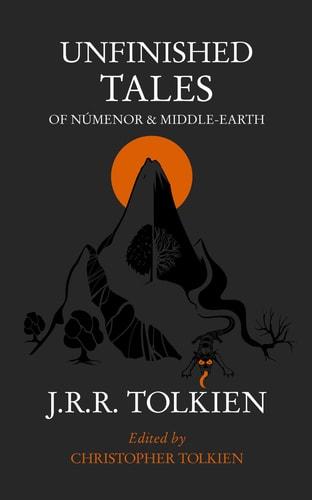
Unfinished Tales
Chapters - J. R. R. Tolkien, Christopher Tolkien
Part 1: The First Age
Chapter 1: Of Tuor and His Coming to Gondolin
After the Nirnaeth Arnoediad, Tuor son of Huor grows up among the Grey-elves but is captured by Easterlings and later escapes to become an outlaw. Guided by signs from Ulmo, Lord of Waters, he journeys westward through the Gate of the Noldor, reaches the Great Sea at Nevrast, and discovers the ancient halls of Turgon at Vinyamar, where he claims arms left for him by Ulmo's decree. Ulmo himself appears to Tuor on the shore, commanding him to seek Turgon in the Hidden Kingdom of Gondolin and bear a warning. Tuor is joined by Voronwë, the last surviving mariner of Turgon's ships, and together they endure the Fell Winter, cross the perilous Highway, ford the Brithiach, and enter the Dry River leading to the Encircling Mountains. They pass through the Seven Gates of Gondolin, each more magnificent than the last, and are received by Ecthelion, Lord of the Fountains, who recognises Tuor as Ulmo's messenger.
On page: Tuor, Ulmo, Voronwë, Ecthelion, Annael, Gelmir, Arminas, Elemmakil, Túrin Turambar, Rían, Lorgan·Mentioned: Turgon, Huor, Húrin, Morgoth, Fingolfin, Círdan, Fëanor
Chapter 2: Narn i Hîn Húrin: The Tale of the Children of Húrin
This extended narrative tells the tragic story of Túrin Turambar, son of Húrin and Morwen. After Húrin is captured at the Nirnaeth Arnoediad, Morwen sends young Túrin to be fostered by King Thingol in Doriath for his safety. There Túrin grows into a proud warrior but accidentally causes the death of Saeros, one of Thingol's counsellors, and flees rather than face judgement. He becomes leader of a band of outlaws and is sought by Beleg Strongbow, his faithful friend. Túrin dwells for a time with Mîm the Petty-dwarf on Amon Rûdh, but is betrayed to Orcs and captured. Beleg rescues him but is slain by Túrin in the darkness, who does not recognise him. Túrin then comes to Nargothrond and becomes a great captain there, but his counsel leads to disaster when the dragon Glaurung destroys the fortress. Afterwards, living among the Men of Brethil under the name Turambar, he weds Níniel, not knowing she is his sister Niënor, her memory stolen by Glaurung. When Túrin slays Glaurung at the gorge of Cabed-en-Aras, the dying dragon reveals the truth to Níniel, who casts herself into the ravine. Learning the full horror from Brandir, Túrin takes his own life upon his black sword Gurthang.
On page: Túrin Turambar, Húrin, Morwen, Thingol, Beleg, Mîm, Glaurung, Niënor, Brandir, Saeros, Sador, Andróg, Melian, Finduilas, Gwindor, Dorlas, Hunthor, Orodreth, Lalaith, Nellas·Mentioned: Morgoth
Part 2: The Second Age
Chapter 3: A Description of the Island of Númenor
This descriptive account details the geography and customs of the island kingdom of Númenor, the great star-shaped land granted to the Edain after the defeat of Morgoth. The island's five promontories and central region of Mittalmar are described, including the sacred mountain Meneltarma where the King alone could speak in prayer to Eru Ilúvatar. The text covers the fragrant trees brought from Eressëa, the culture of horsemanship, the metalworking traditions, and the eagles held sacred to Manwë. The mallorn trees of Númenor are noted as ancestors of those later given by Tar-Aldarion to Gil-galad, who in turn gave some to Galadriel for Lothlórien.
On page: Gil-galad, Tar-Aldarion, Vëantur·Mentioned: Morgoth, Galadriel, Sauron, Elros Tar-Minyatur, Ar-Pharazôn, Tar-Míriel
Chapter 4: Aldarion and Erendis: The Mariner's Wife
This tale from the Second Age follows Aldarion, son of King Tar-Meneldur of Númenor, whose passion for the sea and shipbuilding draws him repeatedly away from the island kingdom. Inspired by his grandfather Vëantur, Aldarion makes many voyages to Middle-earth, befriending Círdan the Shipwright and Gil-galad, and founding the Guild of Venturers and the haven of Vinyalondë. He falls in love with Erendis, a dark-haired woman of the House of Bëor, but their long courtship and eventual marriage are undermined by his inability to remain ashore. Erendis grows bitter during his prolonged absences, and their estrangement deepens as she withdraws to her estates in Emerië with their daughter Ancalimë. The tale, left unfinished, reveals the first stirrings of shadow in Númenor and the seeds of the conflict between sea-longing and the love of the land that would mark the island's later decline.
On page: Erendis, Vëantur, Almarian, Beregar, Gil-galad, Tar-Meneldur, Tar-Ancalimë, Núneth, Soronto, Hallatan·Mentioned: Círdan
Chapter 5: The Line of Elros: Kings of Númenor
This dynastic chronicle records the succession of Kings and Queens of Númenor from Elros Tar-Minyatur, who reigned for 410 years, through the entire line to the Downfall. The account details each ruler's birth, reign, and notable deeds, including Tar-Aldarion's change of the succession law to allow his daughter Tar-Ancalimë to rule as the first Queen. The chronicle traces the gradual decline of the Númenóreans, from their early reverence for the Valar through the growing shadow that led to their destruction.
On page: Elros Tar-Minyatur, Tar-Aldarion·Mentioned: Elendil, Tar-Ancalimë, Tar-Vardamir, Tar-Amandil, Tar-Elendil, Tar-Anárion, Tar-Súrion, Tar-Telperien, Tar-Minastir, Tar-Ciryatan, Tar-Atanamir, Tar-Ancalimon, Tar-Telemmaitë, Tar-Vanimeldë, Tar-Anducal, Tar-Alcarin, Tar-Calmacil, Tar-Ardamin, Ar-Adûnakhôr, Ar-Zimrathôn, Ar-Sakalthôr, Ar-Gimilzôr, Tar-Palantir, Ar-Pharazôn, Tar-Míriel
Chapter 6: The History of Galadriel and Celeborn and of Amroth King of Lórien
This essay traces the evolving and sometimes contradictory legends surrounding Galadriel and Celeborn, exploring their origins, their passage into Middle-earth, and their roles in the Second Age. Various traditions are presented: in some, Celeborn is a Sindarin Elf of Doriath and kinsman of Thingol; in others, he is a Telerin prince of Aman. The essay describes Galadriel's extraordinary nature as the greatest of the Noldor save Fëanor, her refusal to give him a single hair, and the ban placed on her return to the West. The narrative covers the making of the Rings of Power by Celebrimbor in Eregion, the war with Sauron, and the history of Lothlórien, including the legend of Amroth and Nimrodel.
On page: Galadriel, Celeborn, Fëanor, Sauron, Celebrimbor, Amroth, Nimrodel, Mithrellas, Imrazor the Númenórean·Mentioned: Thingol, Elrond, Círdan, Morgoth, Frodo Baggins, Tar-Atanamir, Tar-Ancalimon
Part 3: The Third Age
Chapter 7: The Disaster of the Gladden Fields
In the second year of the Third Age, Isildur sets out from Gondor with his three sons and a guard of two hundred to travel north to Imladris, where his wife and youngest son await. Near the Gladden Fields, his company is ambushed by a vastly superior force of Orcs drawn by the malice of the One Ring. Elendur, his eldest son, urges Isildur to flee with the Ring and bring it to the Keepers of the Three, while his other sons Aratan and Ciryon fall in battle. Isildur puts on the Ring and attempts to swim across the Anduin, but the Ring slips from his finger in the water and he is slain by Orc-arrows as he emerges from the marshes. His esquire Ohtar escapes with the shards of Narsil. Long after, King Aragorn discovers the lost Elendilmir in Saruman's hoard at Orthanc.
On page: Isildur, Elendur, Ohtar, Meneldil, Aratan, Ciryon, Valandil, Estelmo·Mentioned: Aragorn, Saruman, Sauron, Elrond, Elendil, Gimli, Théoden, Gríma Wormtongue
Chapter 8: Cirion and Eorl and the Friendship of Gondor and Rohan
This historical account tells how the alliance between Gondor and the Rohirrim was forged. The first section traces the Northmen and their conflicts with the Wainriders, including the great battles in which King Ondoher of Gondor and both his sons fell. The central narrative follows Cirion, Steward of Gondor, who in desperation sends messengers to Eorl the Young of the Éothéod when the Balchoth threaten to overrun the realm. Only one messenger, Borondir, gets through. Eorl rides south with his full host, aided by a mysterious mist from the direction of Lothlórien, and arrives at the Battle of the Field of Celebrant to save the northern army of Gondor from annihilation. Afterwards, Cirion leads Eorl up to the hallowed summit of Amon Anwar, where he offers the great province of Calenardhon as a free gift, and they swear oaths of eternal alliance between their peoples.
On page: Cirion, Eorl the Young, Borondir, Marhwini, Vidugavia, Vidumavi, Marhari, Forthwini·Mentioned: Sauron, Isildur, Galadriel, Elendil
Chapter 9: The Quest of Erebor
In Minas Tirith after the War of the Ring, Gandalf tells Frodo, Peregrin, Meriadoc, and Gimli the true story behind the quest to Erebor. Gandalf explains how he was concerned about the dragon Smaug as a potential weapon for Sauron, and how a chance meeting with Thorin Oakenshield near Bree set events in motion. He recounts the difficult task of persuading the proud Thorin to accept Bilbo as a companion, revealing the map and key he had received years earlier from the dying Thráin in Dol Guldur. Gandalf reflects that, though Thorin fell at the end through pride and greed, his quest restored the Kingdom under the Mountain, and without the Battle of Dale the War of the Ring might have ended in ruin for the North.
On page: Gandalf, Frodo Baggins, Peregrin Took, Meriadoc Brandybuck, Gimli, Thorin Oakenshield·Mentioned: Bilbo Baggins, Thráin II, Sauron, Saruman, Dáin Ironfoot, Thrór, Smaug
Chapter 10: The Hunt for the Ring
This account details the movements of the Nazgûl in their search for the One Ring in the year 3018. After Gollum is captured in Mordor and reveals the names 'Baggins' and 'Shire' under torture, Sauron sends forth the Nine Ringwraiths. They journey north through the Vales of Anduin but find no trace of Halflings, and return southward in frustration. At Isengard, Saruman lies to the Witch-king about Gandalf's whereabouts and directs them toward the Shire. They capture Gríma Wormtongue who betrays the location, and later seize a Dunlending agent of Saruman carrying maps of the Shire. The Riders overwhelm the Rangers guarding the Shire's borders and enter the land. A companion essay recounts Saruman's long secret interest in the Shire, his use of pipe-weed, and his rivalry with Gandalf, including a notable exchange at the White Council of 2851 where Gandalf defends his love of the Little People.
On page: Gollum, Sauron, Saruman, Gandalf, Gríma Wormtongue, Aragorn, Khamûl, Witch-king of Angmar·Mentioned: Denethor, Boromir, Faramir, Théoden, Galadriel, Frodo Baggins, Radagast
Chapter 11: The Battles of the Fords of Isen
This military history details the two battles fought at the Fords of Isen shortly before the Battle of Helm's Deep. Saruman's chief objective was to slay Théodred, King Théoden's son and heir, while Gríma Wormtongue worked to bring Éomer into discredit. In the First Battle, Théodred is attacked from both sides of the river. Grimbold fights to defend Théodred's body on the eyot, and is saved only by the timely arrival of Elfhelm with reinforcements from Edoras. Théodred dies speaking his last words. In the Second Battle, Saruman launches his full remaining forces, overwhelming Grimbold's shield-wall and driving Elfhelm's riders apart with wolfriders. Erkenbrand assumes command of the West-mark, and Gandalf arrives on Shadowfax to redirect the scattered defenders.
On page: Saruman, Théoden, Gríma Wormtongue, Éomer, Gandalf, Théodred, Grimbold, Elfhelm, Erkenbrand, Dúnhere, Háma·Mentioned: Éowyn
Part 4: Part Four
Chapter 12: The Drúedain
This essay reveals the ancient history of the Drúedain, the Wild Men known in later ages through Ghân-buri-Ghân and the statues of Dunharrow. In Beleriand they lived among the Folk of Haleth, esteemed as loyal allies and skilled trackers who could smell Orcs at great distance. They were stumpy, broad people with deep-set black eyes that glowed red in anger, and possessed uncanny powers including the ability to sit motionless for days in a trance of vigilance. The tale of 'The Faithful Stone' tells how a Drúadan named Aghan leaves a watch-stone imbued with his power to protect his friend Barach's family. When Orcs attack in the night, the stone comes to life and defeats them, but its legs are burned, and Aghan finds his own legs blistered in sympathy. The essay traces the Drúedain's survival through the Ages in the White Mountains until only remnants in the Drúadan Forest were known to Gondor.
On page: Aghan, Barach·Mentioned: Ghan-buri-Ghan, Meriadoc Brandybuck, Morgoth, Sauron, Haleth, Isildur
Chapter 13: The Istari
This essay describes the Istari, the Wizards sent by the Valar to Middle-earth around the year 1000 of the Third Age to contest Sauron's growing power. They were members of the Valar's own high order, clad in mortal bodies subject to weariness, hunger, and death. Of the five chief Istari, Saruman the White came first and was regarded as head of the Order, while Gandalf the Grey, the last to arrive, was recognised by Círdan as the greatest spirit, and was given the Third Ring, Narya, to aid his labours. Radagast the Brown became enamoured of beasts and birds, forsaking his mission, while two unnamed Blue Wizards passed into the East and never returned. A brief narrative tells how the Valar chose the Istari: Curumo was chosen by Aulë, and when Manwë asked Olórin to go, he declared himself too weak, but Varda said 'Not as the third', which Saruman ever remembered with resentment.
On page: Saruman, Gandalf, Sauron, Círdan, Radagast, Alatar, Pallando·Mentioned: Elrond, Galadriel
Chapter 14: The Palantíri
This essay assembles the known lore of the palantíri, the Seeing Stones of Númenor, tracing their history in Middle-earth from the days of Elendil to the War of the Ring. After the loss of the Ithil-stone to Sauron and the shipwreck of the last northern king, the Stones passed out of common knowledge. Saruman gained control of the Orthanc-stone after receiving the keys of the tower in 2759, while Denethor used the Anor-stone in Minas Tirith, probably from the time he became Steward, partly out of jealousy toward 'Thorongil' (Aragorn) and Gandalf. The essay explains the Stones' properties: their permanent poles, fixed orientation, the art of concentration, and the distinction between solitary viewing and two-way communication. While Saruman fell under Sauron's domination, Denethor maintained his integrity until his final despair, strengthened by his legitimate right to the Anor-stone as hereditary Steward.
On page: Saruman, Denethor, Gandalf, Sauron, Peregrin Took·Mentioned: Aragorn, Elendil, Elrond, Galadriel, Isildur