Dark Tower
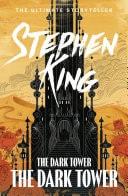
32 chapters - View chapters and summaries
Characters (22)
| Name | Aliases | Role |
|---|---|---|
Roland Deschain The last of the gunslingers and the sole surviving member of a knightly order sworn to protect the Beams that hold the multiverse together. Roland has pursued the Man in Black across a dying world for years, driven by a singular obsession with the Dark Tower - the nexus of all realities. Trained from boyhood in Gilead, he is one of the finest warriors alive, possessed of an almost supernatural speed and accuracy with his revolvers. He is also ruthless, willing to put the quest above all else - a quality that defines him across eight books. | The Gunslinger, The Last Gunslinger, Roland of Gilead | Protagonist |
Mordred Deschain A late-emerging figure whose origins and significance the closing books of the series take their time unfolding - linked by deep bloodlines to forces on both sides of the long cosmic conflict the Tower's defenders have been waging. Possessed of unusual physical capacities and animated by an inheritance of grievance that predates his own existence, Mordred is the rare antagonist whose nature is itself one of the things the series is still revealing in its final act. | The Red King's Son, Mordred | Antagonist |
Pimli Prentiss The Master of Algul Siento (Blue Heaven), a former human originally named Paul Prentiss, of Rahway, New Jersey, before circumstances and a long career took him very much further afield. Pimli oversees the Breaker compound with a mix of bureaucratic efficiency, household-manager fussiness about the dignity of his position, and the kind of carefully cultivated ignorance about what his charges are actually accomplishing that the bigger machine he serves prefers in its supervising staff. | Antagonist | |
The Crimson King The ultimate antagonist of the series - an immortal demon king whose sole purpose is the destruction of the Dark Tower and, with it, all existence. The Crimson King is a presence felt across the later books long before he is seen in any direct way; more cosmic threat than active character through most of the saga, he represents entropy and annihilation given form, the gravity well around which much of the wider Tower mythology is arranged. | Los', Ram Abbalah, The Red King | Antagonist |
Walter o'Dim The primary antagonist of the early Dark Tower books and one of Stephen King's most recurring villains across his wider fiction. A sorcerer of vast age and power, Walter has manipulated events across countless worlds and centuries. He is the Man in Black whom Roland has been pursuing since the first line of the series. Devious and theatrical, he is a figure of genuine menace. | The Man in Black, Randall Flagg, Marten Broadcloak, Walter Padick, Richard Fanin | Antagonist |
Cuthbert Allgood Roland's closest childhood friend and fellow apprentice gunslinger in Gilead. Cuthbert is the quick-witted, talkative one of the trio - sharper-spoken than Roland and quicker to a joke, with a ready grin he can produce even in situations no one else in the room can find anything funny about. He trains alongside Roland under Cort, present for the small everyday cruelties of their apprenticeship and the larger crises that shape them: the master hawkman David's training, the cook Hax's treason, and the unprecedented early test Roland is driven to demand for his coming of age. Loyal, sharp, and unsentimental about the kind of company gunslingers tend to keep, Cuthbert is the friend Roland trusts soonest and longest. | Supporting | |
Dinky Earnshaw A young psychic Breaker held at Algul Siento, and one of Ted Brautigan's closest companions there. Despite his youth and a deliberately rough, prickly manner, Dinky has strong telekinetic ability and an unsentimental streak of compassion. He becomes close to Sheemie Ruiz during their time at the compound. | Supporting | |
Eddie Dean A heroin addict from 1987 New York, drawn into Mid-World through one of the doors on the beach. Quick-witted and irreverent, Eddie has a gift for defusing tension through humour that masks a deep well of courage. He becomes one of Roland's most capable and loyal companions. | The Prisoner, Eddie Cantora | Major |
Father Callahan A former Catholic priest first introduced in King's Salem's Lot, who crosses into the Dark Tower universe and eventually settles in Calla Bryn Sturgis. Whatever happened to Callahan in his New England parish - and the answer is not the kind of thing a man can give a short version of - left him spending years wandering before finding purpose again with Roland's ka-tet. His backstory occupies a substantial section of Wolves of the Calla. | Pere Callahan, Donald Frank Callahan | Major |
Irene Tassenbaum A wealthy summer visitor to the Lovell, Maine area in June 1999, married to a retired physicist, and not at all the sort of person who expects to find a gunslinger from another world standing in her driveway. When Roland and Jake's path brings them through Lovell on a single, extraordinarily compressed day, Irene rises to the occasion with a brisk, intelligent practicality nothing in her summer-resort life has previously had reason to call on - and provides the ka-tet with a piece of help they could not have arranged any other way. | Supporting | |
Jake Chambers A boy from New York who finds himself drawn into Mid-World, where he becomes a companion to Roland and his ka-tet. Perceptive and brave beyond his years, Jake possesses a low-level psychic ability and bonds deeply with the billy-bumbler Oy. | Major | |
John Cullum An elderly Maine caretaker and local who helps Roland and Eddie escape the ambush at Chip McAvoy's store. A shrewd, laconic Yankee with a collection of signed baseballs, he provides shelter, medical supplies, and crucial local knowledge, including the location of Calvin Tower and information about walk-ins on Turtleback Lane. | Supporting | |
Mia A fourth personality inhabiting Susannah's body, whose name means 'mother' in the High Speech. Mia exists solely to protect and nourish what she calls her chap - the strange and uncanny pregnancy Susannah is unwillingly carrying - and the dissonance between her perception of her surroundings (a grand castle, lavish meals) and what Susannah experiences in her body is one of the more disturbing notes of the later books. Whether Mia's interests can coexist with Susannah's is the central tension of the arc she dominates. | Supporting | |
Oy A billy-bumbler - a raccoon-like creature native to Mid-World with limited speech ability - who attaches himself to Jake Chambers and becomes inseparable from him. Oy is capable of mimicking words, shows unusual loyalty and intelligence, and serves as both comic relief and emotional anchor for the ka-tet. | Supporting | |
Patrick Danville A mute young artist with an extraordinary, half-understood gift: the things he draws become real, and the things he erases from his drawings are quietly erased from the world. The very late Dark Tower books bring Patrick into Roland's path under conditions of considerable distress, and the gunslinger inherits the kind of responsibility for him that long fellow-travelling tends to produce. | Supporting | |
Richard Sayre A smooth-talking agent of the Crimson King who operates through the Sombra Corporation - one of the more polished faces the Tower's enemies present to the New York end of the Dark Tower story. Sayre's role unfolds across several of the late books, and the further into his orbit the ka-tet's allies on the New York side are drawn, the less the surface civility tends to mean. | Supporting | |
Sheemie Ruiz A simple-minded but kind-hearted young man who works as a boy-of-all-work at the Travellers' Rest in Hambry. After Cuthbert intervenes to save Sheemie from Depape's near-killing over a spilled bucket, Sheemie becomes utterly devoted to the three boys from Gilead, and especially to Cuthbert. He serves quietly as a go-between for Roland and Susan when the lovers can no longer risk meeting in the open, and proves, in the small ways the situation permits him, that the courage and discretion the gunslingers value are not as tied to formal intelligence as their training tends to suppose. His mother was Dolores Sheemer; the bartender Stanley Ruiz may be his father. | Supporting | |
Stephen King The author himself, appearing as a character in his own story - a young, struggling writer living in Bridgton, Maine in 1977 who, several years earlier, began writing about a gunslinger and a dark tower and then, for reasons he does not entirely understand, stopped. The conceit that the writer of the Dark Tower might be a participant in it as well as its author is one of the bolder moves of the later books, and what Roland and Eddie find when they visit Bridgton is one of the things that turn the structure of the series inside out. | Supporting | |
Susan Delgado A beautiful sixteen-year-old girl from Hambry, in the Barony of Mejis - daughter of the late drover Pat Delgado, niece of the watchful and resentful Cordelia, and the unwilling subject of the arrangement her aunt has brokered to make her Mayor Thorin's gilly in exchange for the return of her family's land and horses. When she falls deeply and improbably in love with the stranger from Gilead now lodging at the Bar K, the arrangement she had reluctantly accepted becomes one she has neither the temperament nor the patience to honour quietly any longer. Brave, intelligent, and unwilling to be a small character in someone else's story, Susan is one of the most fully alive figures the series gives the reader. | Supporting | |
Susannah Dean A civil rights activist from 1964 New York with dissociative identity disorder, drawn into Mid-World through one of the doors on the beach. Her two identities - the composed Odetta Holmes and the volatile, dangerous Detta Walker - must find a way to coexist. A wheelchair user who lost her legs below the knee in a subway accident, she becomes one of Roland's most formidable companions. | Odetta Holmes, Detta Walker, Lady of Shadows, Susannah-Mia, Susannah-Detta | Major |
Showing 1 to 20 of 22 items
Page 1 of 2
Groups (5)
| Name | Type |
|---|---|
| Groups in The Dark Tower (series) | |
| Big Coffin Hunters | Faction |
| Deschain Family | Family |
| Gunslingers | Faction |
| Ka-tet of the Nineteen and Ninety-nine | Faction |
| The Breakers | Faction |
History
| Date | Event | Details |
|---|---|---|
5 June 2004 | Award Nominated | Bram Stoker Award Bram Stoker Award for Best Novel |
21 September 2004 | Publication | The conclusion to a series begun over thirty years earlier divided readers sharply, largely over its ending - which King defended in an author's note addressed directly to the reader. Won the British Fantasy Award for Best Novel in 2005. Nominated for the Locus Award for Best Fantasy Novel the same year. The Washington Post called the series "a humane, visionary epic and a true magnum opus." The New Yorker praised it as "better and weirder" than expected. Some critics felt the final chapters were rushed or unsatisfying; King's response was characteristically direct, arguing that the journey was the point and that readers who wanted a different ending were welcome to imagine one. Published on King's birthday. |
2005 | Award Won | British Fantasy Award August Derleth Award (novel) category |
2005 | Award Won | Phantastik Preis Foreign novel category |
2005 | Award Nominated | Quill Award SF/fantasy/horror category |
25 June 2005 | Award Nominated | Bram Stoker Award Novel category |
2 July 2005 | Award Nominated | Locus Award Fantasy novel category, 4th place |
October 2005 | Award Won | British Fantasy Award British Fantasy Award (August Derleth Award) for Best Novel |
6 November 2005 | Award Nominated | World Fantasy Award World Fantasy Award for Best Novel |
Award Nominated5 June 2004
Bram Stoker Award
Bram Stoker Award for Best Novel
Publication21 September 2004
The conclusion to a series begun over thirty years earlier divided readers sharply, largely over its ending - which King defended in an author's note addressed directly to the reader. Won the British Fantasy Award for Best Novel in 2005. Nominated for the Locus Award for Best Fantasy Novel the same year. The Washington Post called the series "a humane, visionary epic and a true magnum opus." The New Yorker praised it as "better and weirder" than expected. Some critics felt the final chapters were rushed or unsatisfying; King's response was characteristically direct, arguing that the journey was the point and that readers who wanted a different ending were welcome to imagine one. Published on King's birthday.
Award Won2005
British Fantasy Award
August Derleth Award (novel) category
Award Won2005
Phantastik Preis
Foreign novel category
Award Nominated2005
Quill Award
SF/fantasy/horror category
Award Nominated25 June 2005
Bram Stoker Award
Novel category
Award Nominated2 July 2005
Locus Award
Fantasy novel category, 4th place
Award WonOctober 2005
British Fantasy Award
British Fantasy Award (August Derleth Award) for Best Novel
Award Nominated6 November 2005
World Fantasy Award
World Fantasy Award for Best Novel