Serpentine
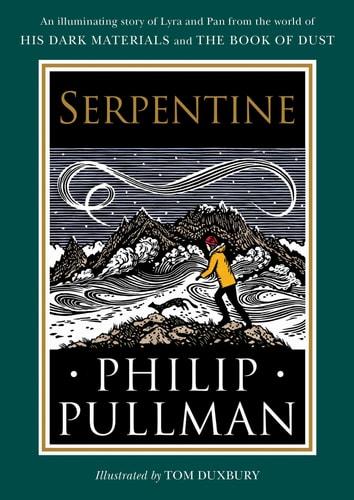
1 story - View chapters and summaries
Characters (12)
| Name | Aliases | Role |
|---|---|---|
Lyra Belacqua A girl raised among the scholars of Jordan College, Oxford, in a world where every human soul takes the form of an external animal companion called a daemon. Reckless, gifted at deception, and possessed of an instinctive ability to read the alethiometer, she embarks on a journey north to rescue missing children that becomes something far larger - a journey that places her at the centre of a war for the nature of consciousness across all worlds. | Lyra Silvertongue, Lizzie Brooks | Protagonist |
Will Parry A boy from our world who has spent years caring for his mentally fragile mother while searching for his missing father. His discovery of a window into the abandoned city of Cittagazze brings him into Lyra's world and eventually makes him the bearer of the subtle knife - a blade capable of cutting windows between any two worlds. Quiet, self-contained, and accustomed to carrying adult burdens, he forms a partnership with Lyra that becomes the emotional centre of the trilogy. | Will | Protagonist |
Farder Coram Elder statesman and advisor to the Gyptian people, and former lover of Serafina Pekkala. Old and physically frail but sharp in mind, he guides Lyra and counsels John Faa throughout the northern journey. | Supporting | |
Iorek Byrnison An armoured bear - one of the panserbjorne, a race of intelligent polar bears who craft and wear their own soul in the form of armour - who has been exiled from Svalbard and reduced to working as a blacksmith in Trollesund. Restored to his armour by Lyra's intervention, he reclaims his throne and becomes one of her most formidable allies. | Major | |
Lee Scoresby A Texan aeronaut who pilots a hot-air balloon and takes on dangerous commissions for pay. Laconic, practical, and deeply loyal to those he chooses to trust, he becomes one of Lyra's most important protectors. | Major | |
Lord Asriel A nobleman, explorer, and experimental theologian whose obsessive research into Dust and the nature of parallel worlds places him in direct conflict with the Magisterium. Cold, imperious, and capable of extraordinary ruthlessness, he nonetheless drives the central philosophical argument of the trilogy - that experience, consciousness, and the freedom to know are worth any cost. | Asriel Belacqua | Major |
Mary Malone A physicist and former nun at a research institute in Will's world, whose work on dark matter makes her an unwitting participant in events far beyond her understanding. Warm, intellectually honest, and shaped by her departure from religious life, she becomes a crucial figure in the philosophical argument of the trilogy. | Major | |
Pantalaimon Lyra's daemon, capable of changing form at will until adulthood fixes his shape as a pine marten. Pantalaimon functions as Lyra's conscience, companion, and other self - a manifestation of her soul that can speak, reason, and feel independently. | Pan | Major |
Roger Parslow Lyra's closest friend at Jordan College, a kitchen boy whose disappearance among the stolen children sets her on her journey north. | Supporting | |
Serafina Pekkala Queen of a Finnish witch clan and former lover of Farder Coram, she is centuries old but appears as a young woman. Witches in this world do not age visibly and live apart from human society. Serafina becomes a critical ally to Lyra, bringing her clan's resources and her own formidable abilities to bear in the war against the Magisterium. | Major | |
Duncan Armstrong A graduate student from Jordan College who drives the supply tractor between the dig site and Trollesund. His daemon is a russet ferret. | Minor | |
Kaisa Serafina Pekkala's daemon, a grey goose who can travel vast distances from his witch. He serves as scout and messenger, bringing crucial intelligence about Bolvangar and helping free the severed daemons. | Minor |
History
| Date | Event | Details |
|---|---|---|
15 October 2020 | Publication | The New York Times praised its "effortless clarity" and mix of cosiness and darkness. Critics described it as a minor work, suitable primarily for devoted fans rather than newcomers, due to its limited scope. Kirkus called it "about as slight as Pullman gets." Valued more as an emotional bridge between His Dark Materials and The Book of Dust than as a standalone story. |
Publication15 October 2020
The New York Times praised its "effortless clarity" and mix of cosiness and darkness. Critics described it as a minor work, suitable primarily for devoted fans rather than newcomers, due to its limited scope. Kirkus called it "about as slight as Pullman gets." Valued more as an emotional bridge between His Dark Materials and The Book of Dust than as a standalone story.